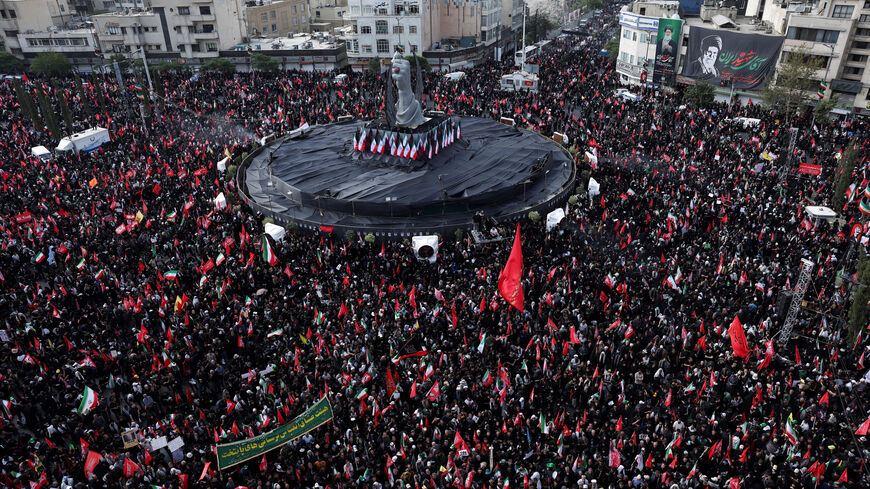
This week, Hezbollah celebrated the anniversary of the martyrdom of three of its top founding leaders who were assassinated by Israeli intelligence over the past three decades. The life and role of each of those leaders reflects a big part of how Hezbollah emerged and evolved.
Coincidentally, all three leaders were killed during the month of February, which drove Hezbollah to set Feb. 17 as the annual date to commemorate them and shed light on their role within the party’s history. On Feb. 6, 1984 a special Israeli unit assassinated one of the party’s most prominent operatives, Sheik Ragheb Harb. On Feb. 16, 1992, Israeli jets killed Hezbollah’s first secretary general, Sheik Abbas al-Mussawi. And on Feb. 12, 2008, Israeli intelligence assassinated Hezbollah’s military commander Imad Mughniyeh by blowing up his car when he was visiting Damascus.
The party brags about being a “party of the martyred leaders,” as a sign that even the organizational heads of the party are jihadists, and not just occupying a post of privilege. But recently, that image has been somewhat tarnished. When the party joined the government and started benefitting from its spoils it caused the emergence within the party of a class that works to serve its own interests. What happened with Hamas after reaching power in the Gaza Strip is happening now within Hezbollah after it became part of the Lebanese government.
It has been said that the greatest danger for any resistance is when it starts to govern. This is what Hezbollah is now facing as the party has recently been connected to several corruption scandals. Hezbollah’s Secretary-General Hassan Nasrallah personally intervened recently to deal with corruption cases in the party’s leadership structure.
AL-MONITOR All-Access gives you unlimited access to all our journalism, the full Daily Briefing, exclusive interviews, premium newsletters, and live events — for less than $2/week.