Lebanese Army Considers the Brink
Ali Hashem presents a Lebanese Army officer's insights into the prospect of growing domestic instability and the Syrian conflict's spillover into Lebanon.

It is said that whenever it rains in Syria, the Lebanese have to open their umbrellas. At the moment, it's raining bombs and bullets in Syria, so Lebanon must bleed as well. A recent incident — on Feb. 1, when two Lebanese Army soldiers were killed in an ambush while pursuing a suspect in Arsal, near the Syrian border — was an indication of Lebanon’s potential to inch closer toward the brink. If movement continues, the army will have much more to worry about.
During the Lebanese civil war, the various political factions all agreed to keep the military out of their differences. For years, the army was one of a few untarnished symbols in the country. This status allowed two army chiefs to be elected president in the past 15 years.
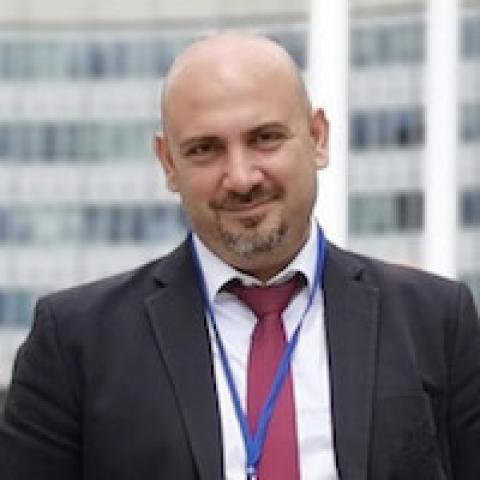
Today the Lebanese armed forces — known to be the smallest, poorest, and weakest military in the region — find themselves in the middle of two major problems in the region: the Syrian civil war and the Arab-Israeli conflict. Members of the military leadership are naturally concerned about the potential effects of regional unrest on Lebanon. One senior commander, who spoke on condition of anonymity, complained that the “challenges are often far beyond the army's capabilities,” although he still feels confident in the establishment's ability to defuse local flashpoints.
“We are able to control the southern border with Israel and keep it quiet,” he said while also noting that this area might be the third item on his list of priorities. “The resistance isn't interested in conflict, and neither are the Israelis, though we still have to make sure 15,000 soldiers are in the south,” the officer stated. This figure represents 25 percent of Lebanon’s military personnel, which leaves the army with only 45,000 soldiers for contending with its main priorities — local unrest and the Syrian civil war’s implications for Lebanon.


