What's next for Abadi?
Prime Minister Haider al-Abadi's moderate path in implementing government reforms has kept the peace among the governing political parties.
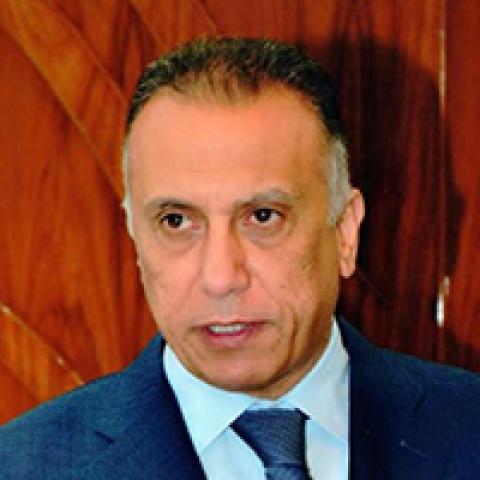

It is no secret that the internal and regional disputes that dashed former Iraqi Prime Minister Nouri al-Maliki’s hopes of serving a third term eventually led to a fragile agreement on forming the new government, ultimately established by Haider al-Abadi, in September 2014. Although Prime Minister Abadi has exerted great effort to maintain a balance between factions and keep the country from falling prey to confrontations between rival camps, the extent of the polarization he continues to face is making his task difficult.
Abadi adopted a middle-ground approach to the US-Iranian competition over influence in Iraq in order ultimately to preserve Iraq’s own interests. Abadi visited both countries within a relatively short period after taking office, heading to the United States on April 13 and to Tehran on June 17 on his second visit to Iran. Abadi also refused to take sides in the ongoing disputes between the Kurdistan Regional Government (KRG) in Erbil and the unity government he heads in Baghdad and between the KRG and the political parties currently holding power. This has spared the country the type of public and intense conflicts that flared up under previous governments.
In the fight against the Islamic State (IS), Abadi has managed to maintain some kind of balance in roles for the volunteer Popular Mobilization Units, the Iraqi armed forces and the international coalition. The positive outcome of this balance was manifested in the liberation of Tikrit on March 31. Abadi was able, through negotiations, to distribute roles among the different parties and thus avoid wholesale withdrawals by some of them in protest of the particulars of the others’ involvement.
When demonstrations began flaring up across the country in recent months, Abadi was caught between the hammer and the anvil. The populist protests against corruption and lack of services were strongly backed by the religious authority in Najaf. Grand Ayatollah Ali al-Sistani had issued a statement back in February 2011 in which he declared his support for popular demands. Sistani also pushed for Abadi to implement quick and radical economic, political and administrative reforms irrespective of political party apportionment or representation. On the other hand, Abadi had to deal with those sharing power and the backing they enjoyed from Iran.


