BEIRUT — In the Shiite neighborhood of Zqaq el-Blat in Beirut lives Fatima Fneish, who has agonized over the disappearance of her brother Hussein Fneish, 16, who went missing in 1976 during Lebanon’s civil war on his way to school.
Fneish, 60, invited Al-Monitor to her home to share her family’s story. As she sipped her coffee and smoked nervously, she said, “Hussein was with [our] mother and father. He was walking when the Phalange, who were in the area. … They called out to him because he was tall for his age, and arrested him. My mom, afraid my brother would get shot, said they could take him and the [family] would find him again [later].” But the Fneish family would never see him again.
The Phalange militia, a party largely supported by Maronite Christians in Lebanon, had set up a checkpoint near what is now the Khodor el-Karantina neighborhood. Fneish is one of thousands who went missing during the 15-year Lebanese civil war, which began in April 1975 and lasted until 1990. With many different groups fighting a cultural and religious war, it has been estimated that at least 17,000 people went missing — kidnapped or killed — during continuous rounds of violence. For the families of those who went missing, closure has been long overdue.
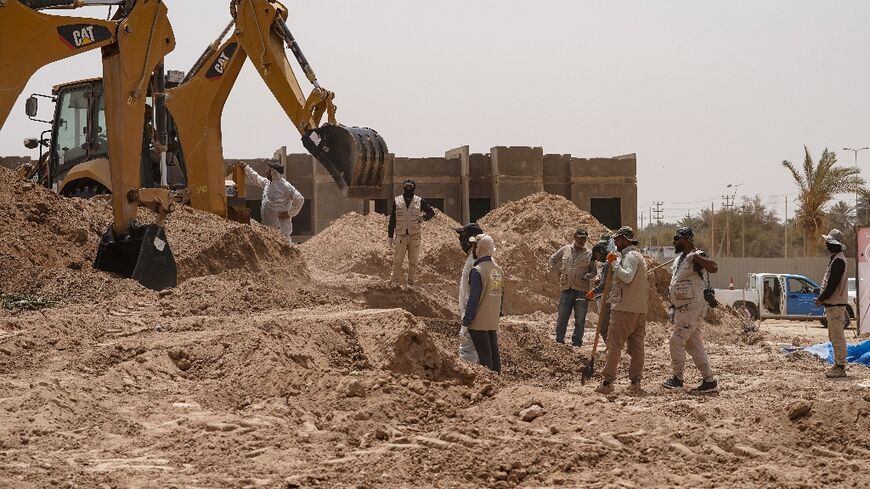
But now, the International Committee of the Red Cross is preparing to introduce a DNA testing program to the forensic investigation into Lebanon’s missing.
AL-MONITOR All-Access gives you unlimited access to all our journalism, the full Daily Briefing, exclusive interviews, premium newsletters, and live events — for less than $2/week.