Hifter may be pushing his luck by manipulating Libya's oil
Libya’s Gen. Khalifa Hifter appears to be using his control of oil ports as a political bargaining chip, but his success seems doubtful.
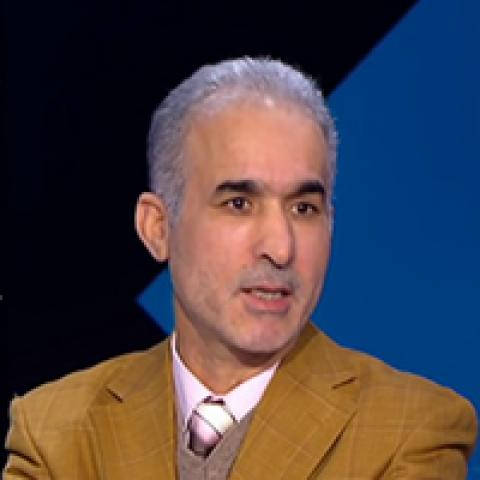

On June 28, Gen. Khalifa Hifter, commander of the Libyan National Army (LNA), declared full victory in Derna after a month of fighting to take back the northeastern city from a coalition of terror groups including al-Qaeda and the Islamic State (IS). By taking Derna, the historical springboard of all kinds of jihadis, Hifter is now the dominant, unchallenged military and political figure in the entire eastern region of Libya, as well as parts of the south.
He is definitely much stronger than he was just a month earlier. In light of these recent victories, it might seem time for Hifter to translate this military victory into some sort of political credit. But doing so isn't as straightforward as he might think.
Hifter once served under Libyan dictator Moammar Gadhafi, having participated in the 1969 coup that brought him to power. But Hifter also helped the United States and NATO overthrow Gadhafi in 2011, which left the country divided into two opposing authorities. Today, the UN-backed Government of National Accord resides in Tripoli in northwest Libya, while Hifter's LNA controls the east from Tobruk.
In 2016, Hifter made a serious strategic military error. The LNA took control of the oil ports of Es-Sidra and Ras Lanuf from an armed militia led by Ibrahim Jadran, who had held the ports and suspended oil exports from 2013 to 2016. Hifter returned control of the ports to National Oil Corp. (NOC) in Tripoli. But he left the region lightly defended, and Jadran recently took advantage of that weakness once again. On June 14, as Hifter's forces were busy fighting in Derna, Jadran's militia unexpectedly retook the ports very easily. It is true that the LNA managed to chase Jadran out again just one week later, but extensive damage was done.


