Israel's deputy FM, Sharren Haskel, bets on a new right after breaking with Netanyahu
Former Deputy Foreign Minister Sharren Haskel resigned from her position shortly before the Knesset dispersed and has formed a new party opposed to exempting ultra-Orthodox men from military service.
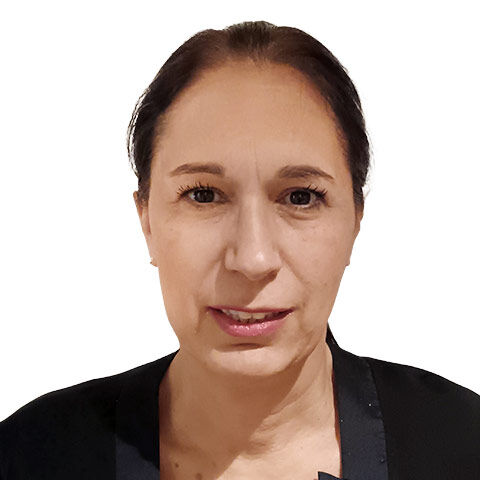

JERUSALEM — Two weeks after resigning as deputy foreign minister and quitting the New Hope party, Knesset member Sharren Haskel is confident that her newly formed Israel First party will win enough votes to enter the Knesset in the Oct. 27 elections.
"I'm a woman. I'm young. I'm Mizrahi, of Moroccan descent. I served as a combat soldier, and I'm proud of it," Haskel told Al-Monitor, stressing that her party will be the only one led by a woman. "I'm also a mother, and I stand behind everyone serving in the military. That's an important voice to have in Israeli politics," she said.
Haskel, 42, a longtime environmental and animal rights activist, was first elected to the Knesset in 2015 on the Likud ticket. During her first term, she chaired the Knesset's LGBT caucus. In 2020, she joined senior Likud figure Gideon Saar when he broke away to establish the New Hope party. In 2024, she was appointed deputy foreign minister, serving under Saar.
Haskel resigned from the government on July 14 in protest over legislation backed by the coalition that shields ultra-Orthodox men who evade military service from arrest. The legislation was part of a series of controversial bills pushed through by the coalition in marathon Knesset sessions before parliament dissolved early ahead of the elections.
According to Israeli military data published July 28, some 4,000 ultra-Orthodox men between the ages of 18 and 26 enlisted over the past 12 months. The military estimates that approximately 14,000 ultra-Orthodox men reach draft age every year and that about 80,000 are currently eligible for military service.
"This exemption law is legally and morally corrupt, especially during wartime. That's why I was so furious," Haskel told Al-Monitor.
Although she is no longer a member of the government, Haskel continues to support Prime Minister Benjamin Netanyahu's right-wing agenda, including his support for the settlement enterprise in the West Bank.
The following interview has been edited for length and clarity.
Al-Monitor: You were a member of the government for two years, defending its policies. Why did you resign only days before the Knesset dispersed?
Haskel: The legislation protecting ultra-Orthodox draft evaders drove me out of the government. It was something I simply could not accept. The Supreme Court will probably reject this bill and cancel it. The government knows it cannot defend it because it's indefensible from both legal and moral points of view. Politicians cannot be above the law. In the Knesset, we have almost 20 parliament members who are ultra-Orthodox. Some of their children and grandchildren could be wanted by the military police because they broke Israeli law by refusing to enlist. That was why they legislated this bill, which prevents the military police from arresting their family and community members.
My campaign against the exemption of ultra-Orthodox men started a year and a half ago. I said clearly that if this bill passed, especially in these times of war, I wouldn’t be able to be part of a government. I must back the people who are serving in the military and who have paid huge prices to protect my family and our country.
Al-Monitor: You have established a new party, similar to several other politicians who have founded political platforms ahead of the elections. What are you hoping to accomplish?
Haskel: What I'm trying to build now is a movement that stands up for those who do serve the country, that has their backs, because no one in the Knesset is doing that. That became clear not only with the passage of this outrageous law, but also with the government's attempts to funnel millions of shekels to the ultra-Orthodox sector even after the Knesset had dispersed.
I'm in discussions with many people. What we're trying to build is a right-wing movement that doesn't boycott anyone except anti-Zionists. I want to see a broad Zionist government free from political extortion.
Today, a right-wing government is held hostage by the ultra-Orthodox parties. A left-wing government would be held hostage by the Arab parties. We need to build something in the middle. I want to create a bloc that will force Netanyahu and [Yashar leader Gadi] Eisenkot, Netanyahu and [Together leader Naftali] Bennett, to sit together and build a platform focused on Israel's security, its economy and national unity. Those are the three issues that will determine whether Israel survives the coming years.
Al-Monitor: Netanyahu is being criticized over his complicated relationship with President Donald Trump. Do you think the strategic partnership between Israel and the US is at risk?
Haskel: Trump is looking after the interests of America and the American people. Same as Netanyahu, who is looking after the interests of Israel and the Israeli people. When Trump went to war with Iran, he was first of all defending American interests.
I have some disagreements with Netanyahu on certain issues — disagreements that I voice — but otherwise, I back him completely. The cooperation between Israel and the US is very close. We know that America is our ally. We know that our interests in the international arena are similar. We are both fighting radical Islamists and fanatical regimes that want the destruction of America and Israel, and we both need to confront those threats.
If Trump had called us to join in, we would have joined. If Iran had attacked us, we would've responded. Israel had been attacked for six months, bombarded by Hezbollah and the Iranian military, before we responded. No other country would have tolerated that. But we are at a point where things can change dramatically almost every single day or even every single hour.
Al-Monitor: The implementation of the pilot zone project, which calls for the Lebanese military replacing Israeli troops in southern Lebanon, is advancing slowly. Are you optimistic about the Israeli military fully withdrawing from the area? Is this in Israel's interest?
Haskel: The Lebanese military is facing a significant problem, with people affiliated with Hezbollah or with family ties to the group serving in its ranks. Still, the June 26 agreement between Israel and Lebanon offers the Lebanese people a one-time opportunity to liberate themselves from their Iranian patrons. We — Israel — are not going to be there forever. We do not want to be there forever. The Americans are not going to be there forever, either. The Lebanese need to make a choice, and it's a tough one, but they must seize the opportunity now.
This one's on us.
The story doesn't end here.
Our correspondents are already on the next chapter. Read everything they file, from $2/week.
See Offers