Arabs Should Test Obama On Israeli-Palestinian Peace
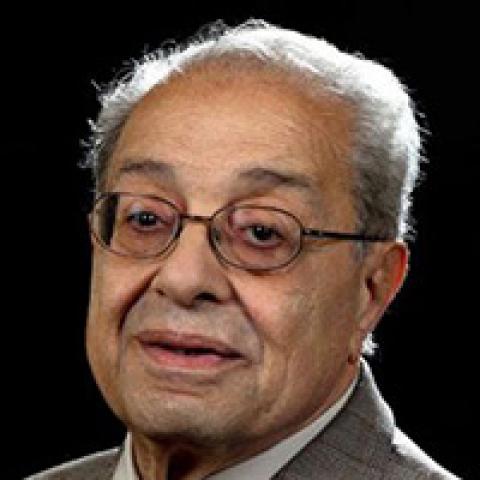
Arabs should soon test whether the second Obama administration is serious about Israeli-Palestinian peace, writes Clovis Maksoud.

With the inauguration festivities commemorating the start of President Barack Obama’s second term, the United States expects that the president will have a freer hand in dealing with many issues on the international and national levels.
The first sign of the overall shift in the balance of power is that the republican majority decided to pass a three-month extension of the U.S. debt limit, and according to the Financial Times, this “reflect[s] mounting concern about bearing the blame for any brush with default for the U.S. economy.” This is a signal that the Republican Party cannot afford any longer to confront the president headlong on an ongoing basis. There has been a painful reassessment of their obstructions in the past few days. This does not mean that Obama will have a free hand on the economy, but at least he enters the second term with the definite and clear support of a majority of the American people. This popularity is further enhanced by the bold confrontation his new administration is taking with the National Rifle Association and the growing popularity that he enjoys on this issue.
Yet, he will also be confronting a series of issues on the global scale — in Pakistan and Afghanistan, where he would like to terminate U.S. military involvement by 2014 and bring back the troops. And he also must deal with the recent surge in terrorism, including the challenges in Mali and Algeria. He must decide how to deal with them in a supportive way as he prefers rather than the direct involvement that France has initiated.
And how the emerging foreign policy with the Palestinian issue will be dealt with remains to be seen, particularly if Netanyahu’s coalition broadens or shrinks. In both instances, a more precise analysis can be evaluated after the 22nd of this month. Indications that come out during the campaign suggest that he will pursue a policy consistent with his belief that two-state option is no longer possible. It is in this respect that the Arabs must hasten to expedite the unity of the Palestinian people and enhance the mobilization of the Arab states to take measures to extricate Egypt from the restraints imposed on it by the treaty.


