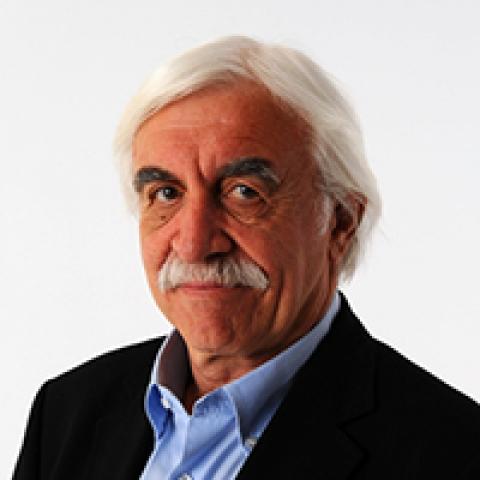
Mehmet Ali Birand, the icon of Turkish journalism, died on January 17 in an Istanbul hospital. Birand, who had been receiving cancer treatments for the last two years, was 72 years old. A day before his death, he was to undergo a relatively simple surgical procedure to replace a stent in his gall bladder and was expected to be discharged the following day. Instead, his heart stopped, and he could not be resuscitated. In his long career, Birand realized many “firsts,” associating his name with numerous accomplishments. He was a true pioneer.
In 1983 Birand launched “The 32nd Day,” the first and longest-running world news television program in Turkish history. With that project, he brought the world and its leaders and their views into Turkish living rooms. He introduced us to international personalities whom no one else could have interviewed.
While working with the center-left Milliyet, the daily where he got his start as a foreign news reporter in 1964, Birand succeeded in opening a Brussels office, which was the first foreign bureau of a Turkish newspaper. He also became the first journalist to be posted there and remained in Brussels for 20 years.
Birand wrote a number of books, among them Yes, Sir (1986), published in English as Shirts of Steel: An Anatomy of the Turkish Armed Forces (1991), which enlightened us about the tutelage mind-set and ideology behind the Turkish military's sense of entitlement to intervene in civilian politics and the country as whole whenever it felt it necessary. The latter book was translated into several languages.
AL-MONITOR All-Access gives you unlimited access to all our journalism, the full Daily Briefing, exclusive interviews, premium newsletters, and live events — for less than $2/week.