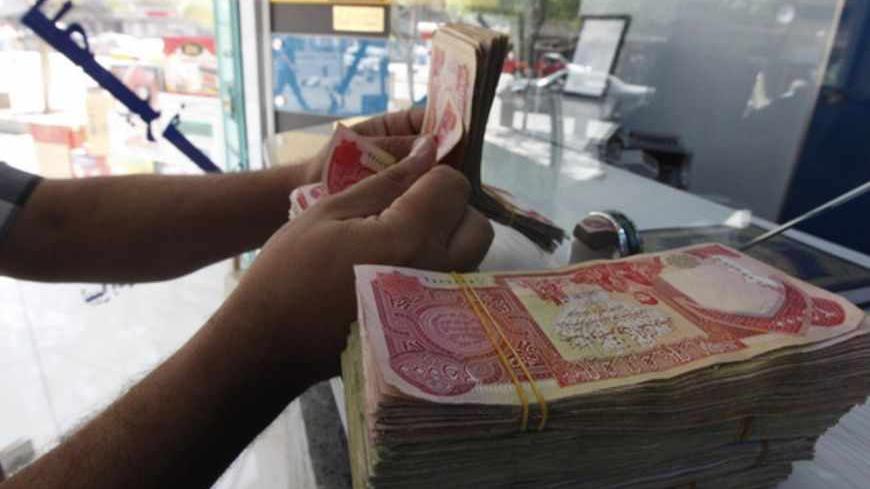
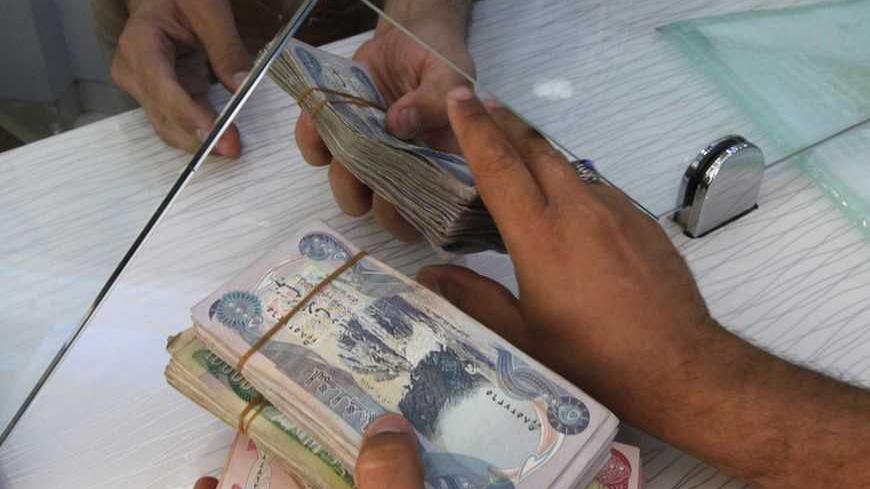
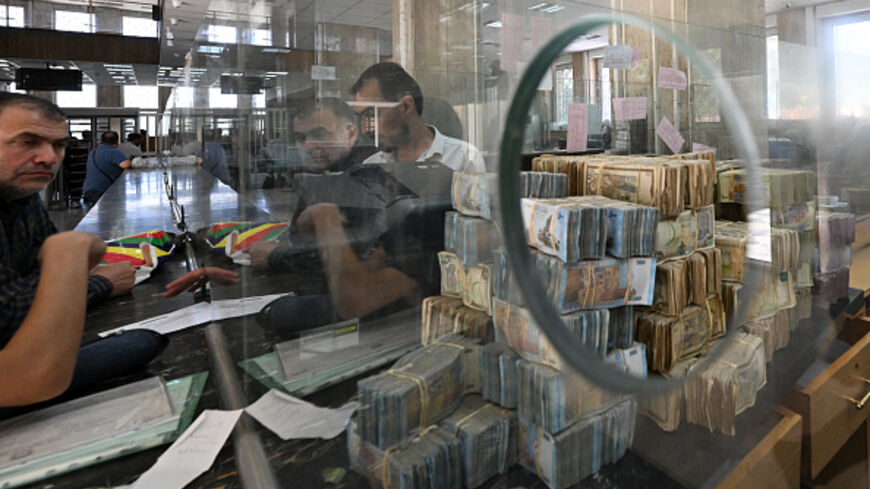
Privately held Iraqi banks have almost entirely relinquished their traditional functions — such as giving out loans, lending credit and issuing letters of credit — due to default risks. Instead, they are resorting to profit making through participation in the currency auction regularly held by the Iraqi Central Bank.
Iraqi banks demand exaggerated guarantees for the granting of any loans to local investors, for fear of defaults on payments. According to banking experts, the value of some loans does not cover more than 40% of the guarantees the privately held banks are demanding, leading to a decrease in the number of loan operations conducted by these banks to a bare minimum.
A lack of local confidence in privately held banks has contributed to their reluctance to enter the market. According to banking expert Dr. Ahmad Brayhi, “Members of the public are depositing their money in government owned banks because they feel that they will honor their commitments towards them.” He also added, “The public does not have much confidence in local banks, which is why it does not trust them with its money.”
Bank brokers affirm that most privately held banks have either closed — or chosen not to open — branches in Iraqi provinces and restrict their activities to their main branches in Baghdad, due to a reluctance to engage in real banking transactions.
AL-MONITOR All-Access gives you unlimited access to all our journalism, the full Daily Briefing, exclusive interviews, premium newsletters, and live events — for less than $2/week.