Sinai Opium Growers Repent, Turn to Medicinal Herbs
Sinai herbalist Ahmed Saleh, a 38-year-old Bedouin tribesman, tells Mohannad Sabry how he persuaded local opium growers to switch their crop to herbal gardening.
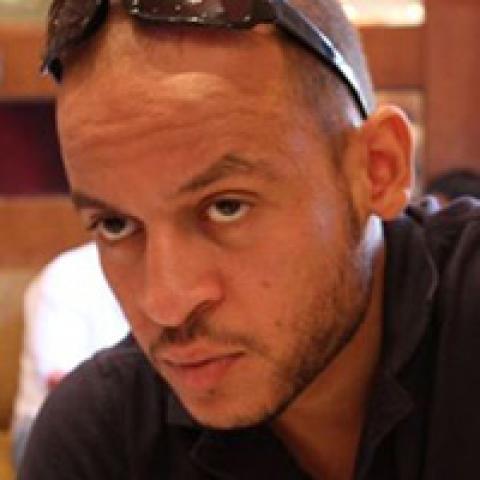

ST. CATHERINE’S, Sinai — Over the past two years, 62 of Sinai’s most outlawed yet professional opium growers have turned their red-flowered fields into plantations of medicinal herbs. Their idol was Ahmed Saleh, the turban-wearing descendant of the Jabaleyya tribe that has been guarding St. Catherine’s Monastery for more than 1600 years.
Saleh, a 38-year-old tribesman who dropped out of elementary school but speaks, reads and writes English and German besides his native Arabic, grew up collecting mountainous herbs as a part of his Bedouin traditions. Almost a decade ago, instead of just boiling herbs for simple medicinal use, he excelled in developing further sophisticated combinations of Sinai’s 472 medicinal herbs, which include 19 endemic and 42 severely endangered herbs.
Since the January 2011 uprising that ousted former President Hosni Mubarak, dozens of desperate tribesmen turned to growing opium in the valleys and mountains of the peninsula after their main source of income, the tourism sector, was left struggling with massive losses due to political strife and an unprecedented security vacuum. Ahmed Saleh decided to kick off (and pledged to continue) his specially-tailored war on illicit crop cultivation.
“Each of them planted and harvested opium at a 300 square-meter field, sometimes bigger, they are naturally born, professional farmers who couldn’t find a righteous path after losing the only source of income for them and their families,” Saleh told Al-Monitor at his research farm, walking distance from St. Catherine’s Monastery. He believes that “the most criminal men could be turned into successful and dedicated servants of humanity, only with the right incentive, definitely not with guns or brutality.”


