Former South Yemen President To Continue to Call for Secession
In an interview with Al-Monitor, former South Yemen president Ali Salim al-Beidh discusses the nature of the Southern Movement, his position on the Gulf Initiative and relations with the US, Iran, Saudi Arabia and Russia.
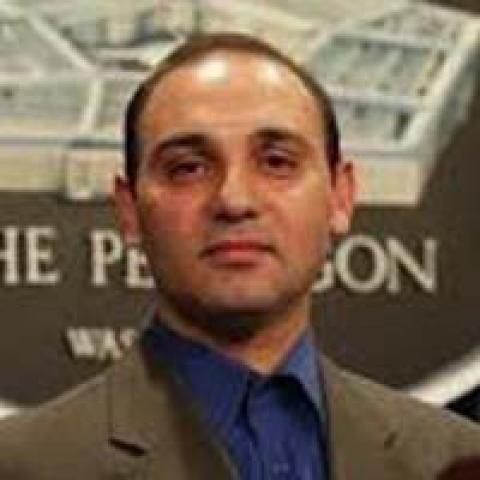

Ali Salim al-Beidh, who was born in 1939, was the president of the People's Democratic Republic of Yemen (South Yemen) and the secretary general of the Yemeni Socialist Party that ruled from 1986 to 1990. It was Beidh who signed a unity agreement with the Yemen Arab Republic's (North Yemen) President Ali Abdullah Saleh, establishing the Republic of Yemen on May 22, 1990. On May 21, 1994, a war broke out between the two sides and ended on July 7 of the same year with the defeat of the south, as northern forces took control. On May 21, 2009, responding to calls from the Peaceful Southern Movement, Beidh announced his desire for a split between the People's Democratic Republic of Yemen, which he represented given that he was president when the unity agreement was signed, and the Yemen Arab Republic. Al-Monitor's correspondent met with Beidh in his office in Beirut, and asked him about his demands for secession, his position on the establishment of a federal region, the national dialogue and relations with the Houthis, Iran, Saudi Arabia, the United States and Russia.
Al-Monitor: Mr. President, what are the reasons behind your call today for the secession of southern Yemen from the north, after you chose to unify in 1990?
Beidh: We called [for secession] on May 21, 1994, after the [north] launched a war against us and their forces and militias entered the south on May 5, 1994. Approximately two weeks after that, we were forced to call for a split between the People's Democratic Republic of Yemen and the north.
We are a state that had entered into an agreement with another state consciously and in a well-thought-out manner, based on a dialogue that lasted 18 years. We were two independent countries and the People's Democratic Republic of Yemen was a member of the UN Security Council. The unified Yemen became a member of the Security Council as a result of our membership. The truth is we had great ambitions for unity, but we found that our brothers in Sanaa did not have the capacity to accommodate this unity. We tried with all our might to form a civil state, but the other side in Sanaa did not want this. No one in Sanaa — which is ruled by an alliance of tribes, the military and Islamists — was capable of [helping us] achieve this goal. None of these forces wanted a civil state, and we were unable to persuade them to do so.


