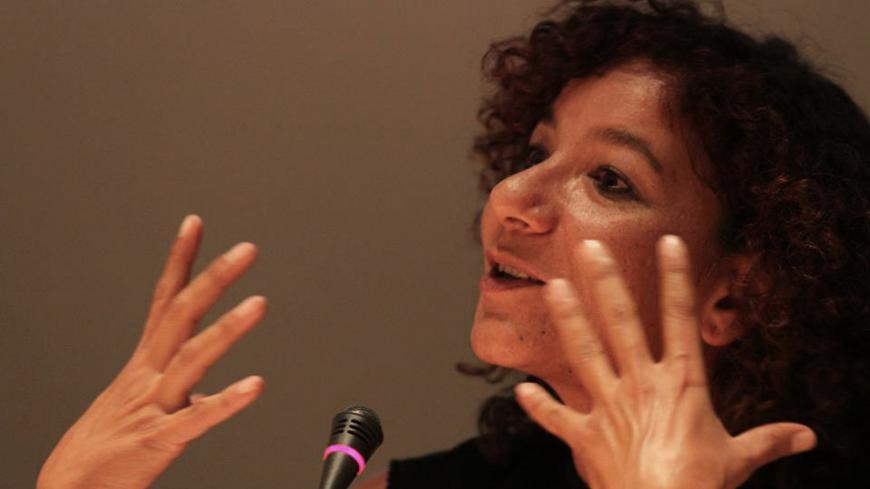
When Mona Prince opened her Facebook inbox on April 13 and saw the message from a colleague, she thought at first that it was a bad joke. She read an appeal by students of the Suez Canal University, where Prince works as a professor of English. It was the invitation to join a rally — and to demand her expulsion.
"I was shocked when I realized that the call was meant seriously," Prince, 43, said in an interview with Al-Monitor — numerous interrogations and murder threats later. She can no longer pursue her work and will probably have to answer to the court, her professional future uncertain.
It all started in early April, when Prince said the issue to be discussed in class was religious tension in Egypt. During the discussion, Prince pointed to a poster: Salafist students had put it on the walls of the university building. In large letters, the slogan read, "Shiites are the enemy.“ Such posters, Prince said to the students, were an example of sectarianism in Egypt after the revolution. Some religious sheikhs would incite sectarian strife in the country, she added, without naming names.
Among the results of the growing influence of Islamist forces in post-revolutionary Egypt are repeated clashes among religious groups that often lead to violence. In April, nine Christians were killed in two days of rioting in front of St. Mark's Cathedral in Cairo. One Muslim died in the clashes; there were numerous injuries. Since Iranian President Mahmoud Ahmadinejed's visit to Egypt, the tensions between Sunnis and Shiites have become visible on the Nile. Salafists especially see the rapprochement between the Sunni Muslim Brotherhood's Mohammed Morsi and his Shiite colleague Ahmadinejad very critically. In April, they vented their anger loudly in Tahrir Square.
AL-MONITOR All-Access gives you unlimited access to all our journalism, the full Daily Briefing, exclusive interviews, premium newsletters, and live events — for less than $2/week.