Brazil's Experience Offers Lessons For Egyptian Civil Society
Brazil's former president offers advice on Egypt's civil society and the draft NGO law.
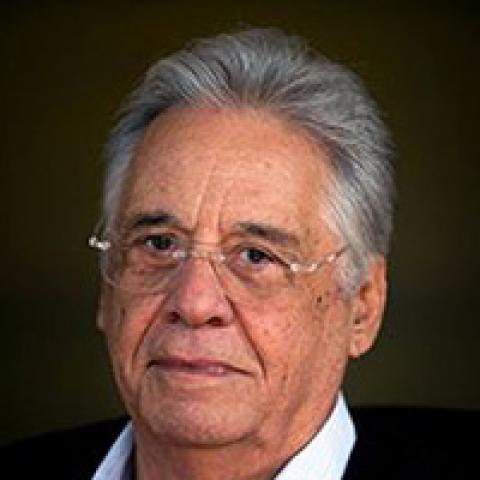

As Egyptian legislators debate a new law to oversee the work of nongovernmental organizations (NGOs), I am reminded of Brazil’s experience in the 1980s — when we, like Egyptians in 2011, turned our backs on authoritarian rule and sought new ways to govern political life.
Egypt’s draft law has drawn the ire of civil society groups, notably for imposing harsh restrictions on foreign funding and foreign organizations and allowing excessive government supervision. Critics of the current text stress that its provisions would not have altered the outcome of a recent, controversial and high-profile trial where jail sentences were handed to 43 NGO workers for belonging to “illegal” organizations, under a widely criticized Mubarak-era law. It is this law which the draft precisely seeks to replace.
Of course, Egypt and Brazil offer two very different contexts. It is particularly difficult to comment on Egypt’s draft, which continues to change. Nevertheless, Egypt's situation is an occasion to restate some general principles, which ultimately come down to this: Civil society always needs, and deserves, strong laws to underpin its legitimacy.
When a military dictatorship took hold of Brazil in the 1960s, my academic work was deemed subversive, I was threatened with imprisonment and forced to live for four years in exile in Chile. The authorities similarly targeted thousands of others — harassing them, jailing them and often worse. This is how the “deep state” created by authoritarian regimes operates — often unpredictably and bluntly — to choke political life through outright repression, covert surveillance and dubious applications of the law.


