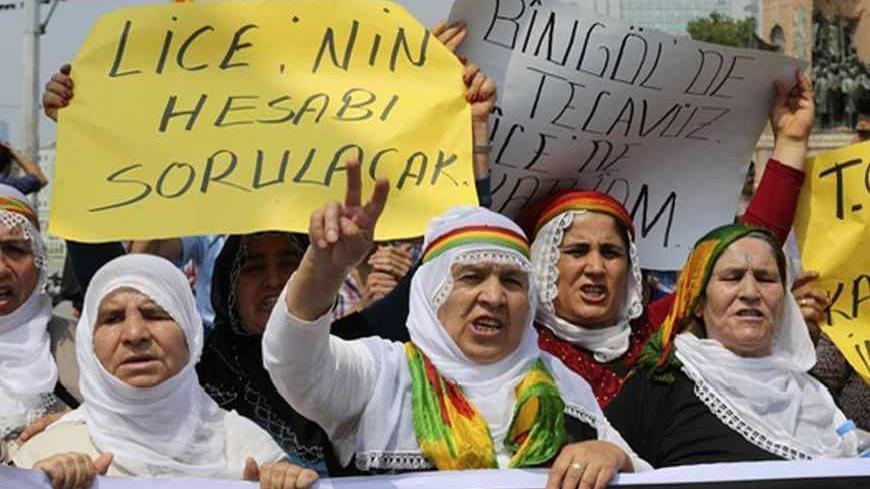
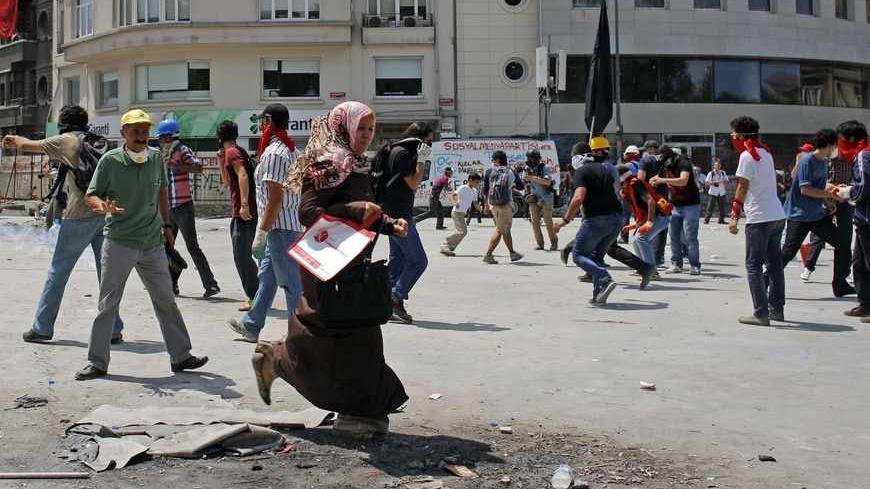
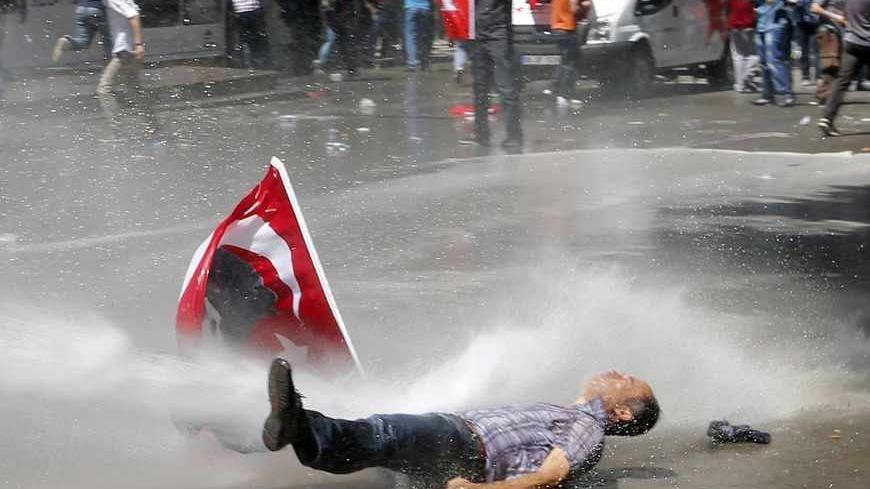
Those of us who have been in Istanbul’s Taksim Square over the past three weeks have seen both Turkey’s worst face and its best face on full display.
Amidst the chaos and the violence of the clashes between protesters and a ruthless police force, a young generation of citizens demanding peaceful coexistence, democratic dialogue and a new way of political engagement appears to have found its voice. But already that budding voice risks being stifled by the polarizing rhetoric of the political classes and the government’s sustained efforts to spin the facts on the ground and create an alternative story for the wider masses to consume.
Led by Prime Minister Recep Tayyip Erdoğan, officials from the Justice and Development Party (AKP) government have systematically depicted the protesters as a bunch of vandals and marauders, wilfully ignoring their overwhelmingly peaceful civilian profile and remarkable sociopolitical diversity from the very beginning. Over time, this rhetoric has grown more menacing, with EU Minister Egemen Bağış declaring on the night of the final police assault in the occupied Gezi Park on 15 June that all those who tried to enter Taksim would be treated as terrorists.
Touring from city to city to galvanize his own supporters, Erdoğan has repeatedly bent the truth to discredit the protesters. Accusing them of burning Turkish flags, harassing pious women or drinking beer in a mosque-turned-infirmary during the early days of the clashes (an accusation denied by the imam of the mosque in question), he has personally fuelled societal tensions instead of alleviating them as a reasonable head of government would do.
AL-MONITOR All-Access gives you unlimited access to all our journalism, the full Daily Briefing, exclusive interviews, premium newsletters, and live events — for less than $2/week.