Israelis Still Attached To Their Jewish-Berber Identity
French-Moroccan film director Kamal Hachkar reveals Morocco’s Jewish past in a moving documentary.
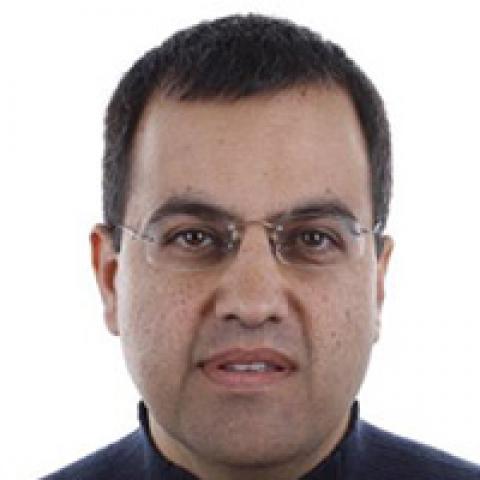

Kamal Hachkar visited his birthplace in the Atlas Mountains with his father when he was 18 years old; that was when he first discovered that Jews once lived in Morocco. Until then, he had always thought that all Jews were of Eastern European-Ashkenazi descent, like the Jews he had met in Paris where he grew up.
Hachkar, 36, a history teacher with a master’s degree in history from Sorbonne University in Paris, began to ask questions. He posed a lot of questions to his father, his grandfather and the elders of Tinghir village, where he was born and which he left in his infancy. Very quickly, a surprising picture emerged. A Jewish community of about 2,000 souls had lived in Tinghir, a village inhabited by Berbers — the most ancient residents of North Africa. The last of the Jews had left the town in the early 1960s, and today most of them live in Israel.
Although he lacked a background in cinema studies, Hachkar decided to make a film on the subject. He documented Tinghir elders talking wistfully about the Jews, and then he came to Israel. Together with photographer Philippe Bellaiche, Hachkar scoured the country looking for Jews from his village. He found them in the towns of Yavne, Or Akiva, Safed and in kibbutz Neve Ur — and it was if they had anticipated his visit, their lost brother from the mountains. The result was an 87-minute debut film, "Tinghir-Jerusalem: Echoes from the Mellah [Jewish Quarter]." Two years have passed since then, and the film continues to pull at the heartstrings of its viewers. It was screened in Israel, Morocco, New York, Paris and Barcelona, and broadcast on the Moroccan M2 television channel. Along the way it garnered five international prizes, headed by the Best First Film prize at the Tangier Film Festival in 2012, despite the fact that anti-Israeli activists demonstrated against it outside the theater.
"I knew about the Holocaust and the Nazi period, but I never thought of the Jews in the Moroccan context. I was sure that Morocco was completely Muslim,” Hachkar told Al-Monitor during a meeting in May. As someone who grew up in France, he often asked himself if he was French or Moroccan. The Jewish question helped him find the answer. “I am very proud of the film,” he says. “The fact that there are Moroccan Jews testifies to the pluralistic culture of Morocco. We have Arabs, Muslim Berbers and Jewish Berbers.”


