Prime Minister Recep Tayyip Erdogan had fingered what he called the "interest lobby” as the culprit behind his political problems arising from the Gezi Park protests and accused domestic and foreign financial institutions of fomenting unrest. But now to cope with the economic problems of the country, he had to allow the Central Bank to increase official interest rates in line with the demands of the financial institutions he had been blaming.
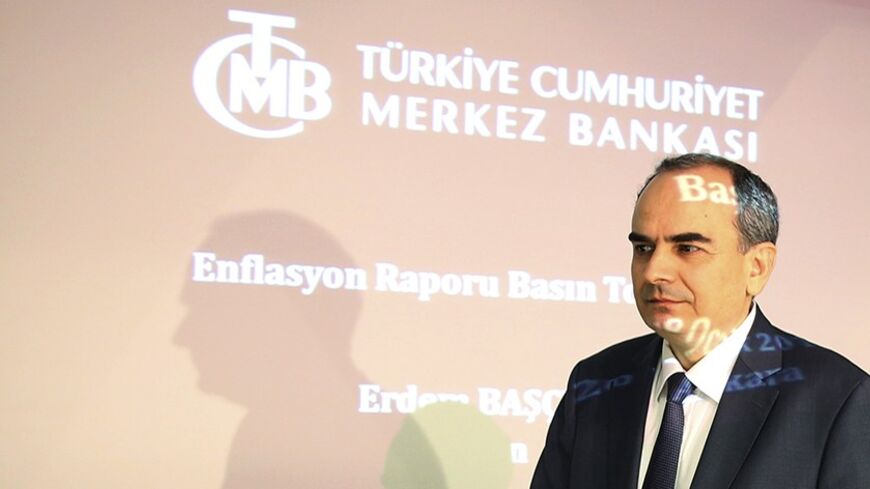
On July 14, Erdogan held a long summit meeting with his ministers involved with the economy. On July 15, when the markets opened, the statement by Erdem Basci, president of the Central bank, revealed the decision taken at the summit. Basci said the interest rate increase will be on the agenda of the Monetary Policy Council, which will meet on July 23. That statement was meant to be perceived by the markets as a sure indication of the upcoming interest-rate increase, and market performance duly improved. Interest rates of treasury bonds that were about to reach double digits eased back by one point, and the parities began to go down while stock shares went up.
In April, Erdogan was unhappy with interest rates that had gone down to about 5%; he wanted an even lower rate. At that time, the exchange rate was 1.75 Turkish lira to the dollar. But because of global developments and the Gezi Park protests in June, interest rates climbed close to double digits and the exchange rate went up to 1.95 Turkish lira to the dollar.
Following the declarations of the US Federal Reserve at the end of May, the outflow of short-term capital from developing countries also affected Turkey, and the markets began to deteriorate. In early June, when global capital movements usually pick up pace, protests at Taksim Square and Gezi Park had begun and rapidly spread across the entire country. The spread of protests accelerated the negative trends in the markets, but how much of this was because of global capital movements and how much of it could be attributed to the protests could not be properly measured. Parallel developments occurred in all developing countries, but Turkey went above the average. In the second week of July, when expectations in global markets were restored and improvements were registered in developing countries, a continuation of negative trends in domestic markets worried the Turkish economic leadership.
AL-MONITOR All-Access gives you unlimited access to all our journalism, the full Daily Briefing, exclusive interviews, premium newsletters, and live events — for less than $2/week.