Islamists Extend Olive Branch To Turkish Atheists
Despite the bitter confrontation between Turkey’s Islamists and secularists, there is a welcome sign of the country’s potential for synthesizng Islam and liberal democracy.
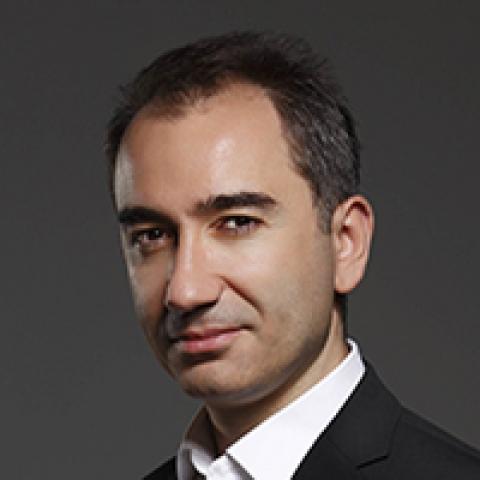

Despite the ongoing political tension between Turkey’s Islamist-leaning administration and its secularist opponents, some of Turkey’s Islamic voices are raising hopes for a liberal future for the country. One of them, Mehmet Gormez, the head of the Directorate of Religious Affairs (DRA), took a commendable step recently by affirming the rights and liberty of both the Alevis, Turkey’s largest non-Sunni minority, and Turkish atheists.
First, it may be helpful to explain what the DRA, a peculiarity of Turkey’s self-styled “secularism,” is. The official institution was established in 1924 after the abolition of the Islamic caliphate by founder Mustafa Kemal Ataturk’s new republic. The republic was destined to be thoroughly “secular” in the sense that it was not controlled by religion, but would itself control religion. The DRA, which employs all imams in the more than 80,000 mosques across Turkey, has been the main vehicle of this state control over faith. Its budget is twice the size of the health ministry, and its voice is as authoritative for Turks as Al-Azhar University is for Egyptians.
Under the Justice and Development Party, whose Islamic sympathies are obvious, the DRA became even more significant, but also somewhat reformist under the leadership of two liberal-leaning theologians: Ali Bardakoglu, who was appointed in 2003, and his former vice chair Mehmet Gormez, who replaced him in 2010. Bardakoglu had openly condemned misogyny and appointed women as muftis (Islamic jurists) for the first time in 2005. Gormez, for his part, entered the public record in 2012 as a defender of the rights of the Ecumenical Patriarchate in Istanbul.
Gormez’s latest remarks on freedom of Alevis and atheists came as a new step in this direction, notably at an iftar (fast-breaking) dinner hosted by his own directorate in Ankara on July 23. Speaking to a large crowd, the majority pious Sunni Muslims, he said, “Every human being who lives in Turkey should express the values of their religion freely without any discrimination. Both modern law and our belief system order us to do so. The Quran always gives people a choice whether to believe it or not. If someone decides to deny the Quran, it won’t be appropriate for me, as a religious man, to deny his thought. God already gave everyone this option.”


