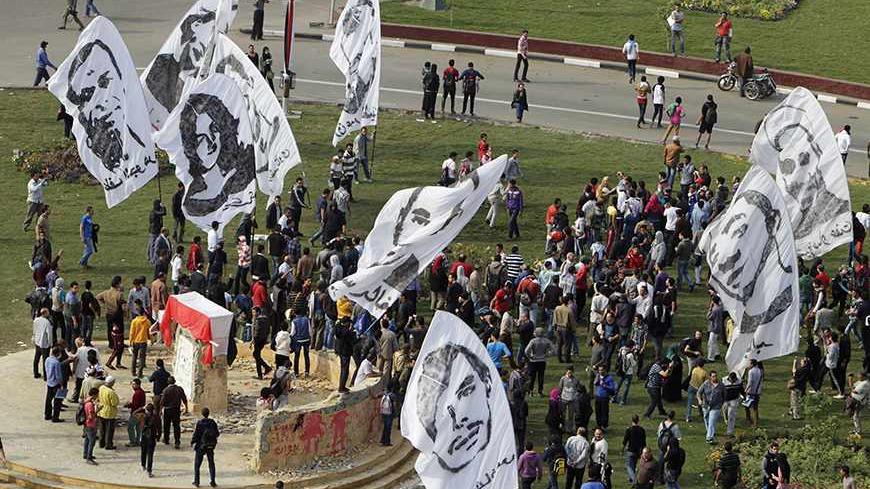
Egyptians once again find themselves stuck between two extremes: democratically elected incompetence verses a capable hand which risks receding the progress triggered by the Jan. 25 revolution. This is largely considered the main reason for Morsi's triumph against military-bred Ahmed Shaffiq in 2012 — and is the foundation upon which Sisi is creeping the army back to power a year later.
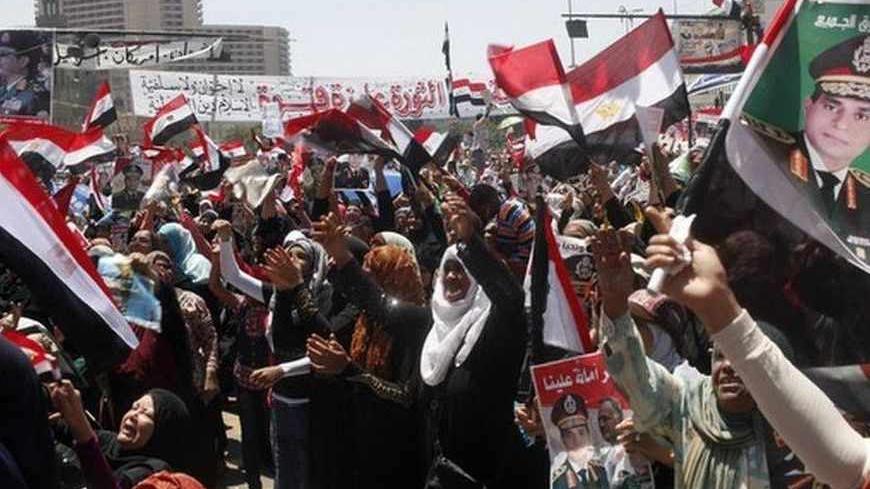
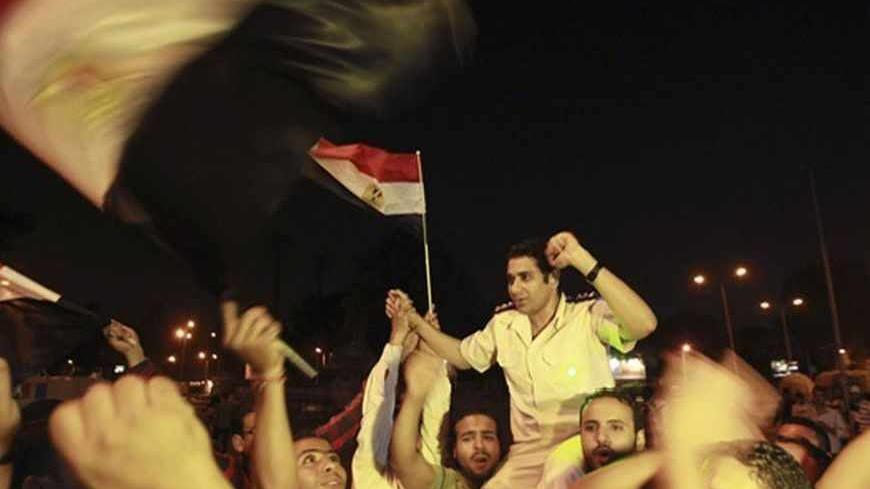
Dubbed "The New Nasser," Gen. Abdel Fattah al-Sisi's rise to stardom following his decision to oust Morsi on July 3 brought the army and police force back to the center of power which they had lost just one year before with the country's first democratic election.
Decisive actions and a carefully constructed image made him appeal to a population disillusioned by the failures of their first civilian government and seem willing to forget their antipathy towards a military that proved authoritarian and inefficient in handling the state under previous ruler, Field Marshall Hussein Tantawi.
In his latest speech, Defense Minister Sisi emphatically contrasted himself with the former civilian president, suggesting that much of Morsi's failure in governing the country was a direct result of his refusal to heed Sisi's warnings. The speech revealed a concerted campaign to paint himself — and any army official — as the only real option for a capable leader.
AL-MONITOR All-Access gives you unlimited access to all our journalism, the full Daily Briefing, exclusive interviews, premium newsletters, and live events — for less than $2/week.