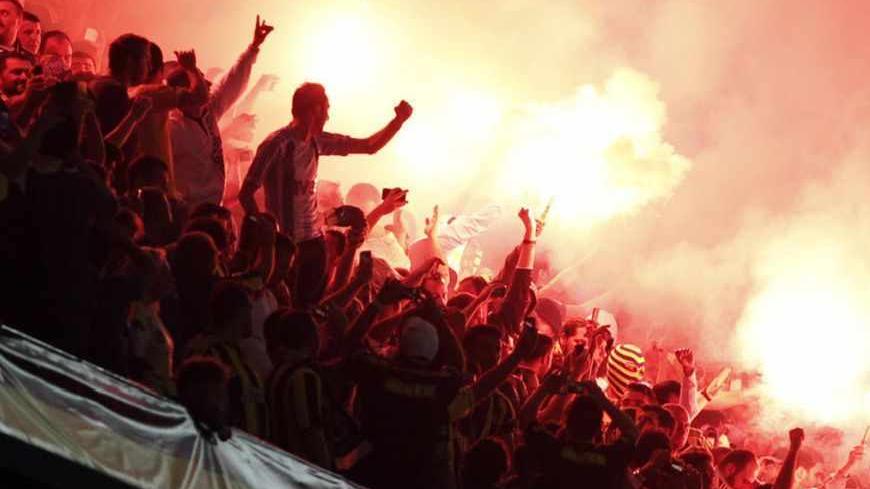
First up, a disclaimer: I love football — or soccer for those who insist to be American about it — and have been a Galatasaray fan my whole life. So any favorable sentiment you might detect toward the supporter group Carsi (pronounced char-shi) profiled in this article, has nothing to do with team colors. Indeed, the group represents a rival Istanbul club, Besiktas. Their blood runs black and white reportedly; mine, on the other hand, is pure yellow and red — of course!
I am only half-kidding. Not many things in the world can be as equally forceful in uniting people and breaking them apart as football is in Turkey.
The new season will kick off here in a few days despite the August heat. Fans of all ages are eager to welcome the latest foreign transfers and local rookies to the Super League, watch old talents play for new teams, wear their lucky jerseys and favorite ball caps to the games during which they will put their rusty vocal chords back to good use as they breath in and out the hope, joy and the occasional fury of the best kind of competition on earth. There at the stadium, for 90-odd minutes they will feel unburdened with life, they will feel free.
These days, the Turkish government seems to fear exactly that — the sense of freedom and ergo, the power that football fans experience when they cheer together as a crowd. Hence, the announcement on July 30 of the ban on political slogans at the games. “We are adding bad political and ideological slogans to the list of illegal demonstrations in football stands, or behavior not complying with sporting ethics,” Interior Minister Muammer Guler said. He did not have to elaborate on what a “bad” political slogan is. Everyone got the message.
AL-MONITOR All-Access gives you unlimited access to all our journalism, the full Daily Briefing, exclusive interviews, premium newsletters, and live events — for less than $2/week.