The Stoic philosopher Epictetus warned of the dangers of casually bad-mouthing the ruler in ancient Rome: “A soldier, dressed like a civilian, sits down by your side, and begins to speak ill of Caesar, and then you too, just as though you had received from him some guarantee of good faith in the fact he began the abuse, tell likewise everything you think, and the next thing is you are led off to prison in chains.”
History has a knack of repeating itself. The Internet and the social media it spawned initially offered safe spaces for citizens in closed societies to express their views. Yet authoritarian rulers unaccustomed to criticism were quick to monitor and infiltrate those virtual spaces and whisk critics and malcontents off to the physical confines of a jail cell.
Nowhere is this more evident than in the hereditary monarchies of the six Gulf states, where rulers are struggling to come to terms with the concurrent rise of social media and increasing desire of emboldened citizens to speak their minds. A recent spate of convictions for bloggers, tweeters and Facebook users across the region is part of an emerging trend that reflects the Gulf rulers’ fear of free speech and open debate.
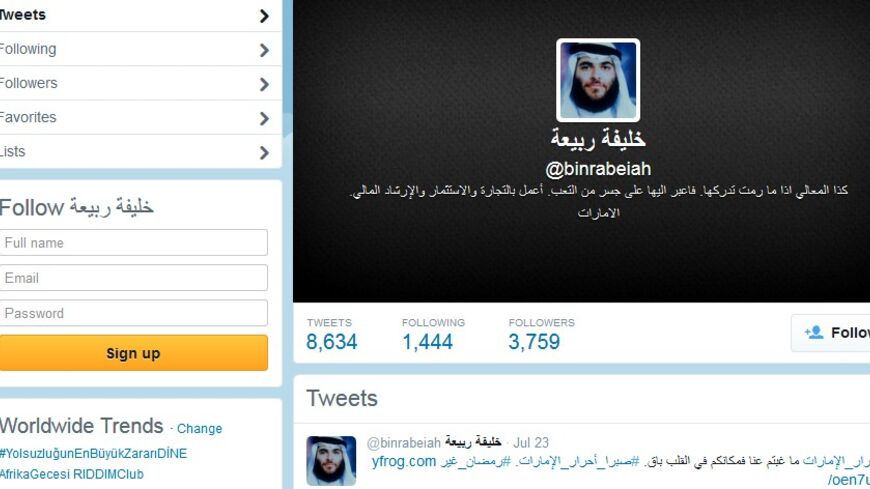
On July 24, the government-linked Emirati television channel 24.ae aired a piece analyzing in detail the Twitter account of Khalifa Rabia, whom authorities had arrested the day before. The segment accused Rabia of “affiliation with secret cells” — a reference to his support for members of a peaceful Islamist group convicted on July 2 of plotting to overthrow the government after a manifestly unfair trial. The segment repeatedly referred to Rabia’s use of hashtags, such as #UAE_freemen, as evidence of his sedition. Authorities have yet to charge Rabia, and his whereabouts in detention, unlike the contents of his Twitter feed, are unknown.
AL-MONITOR All-Access gives you unlimited access to all our journalism, the full Daily Briefing, exclusive interviews, premium newsletters, and live events — for less than $2/week.