Development Fund to Fill New Role, Hopes Iran's Private Sector
Iran’s National Development Fund has been a disappointment, but there is hope that under a new managing director, it can play a meaningful role in job creations and growth.
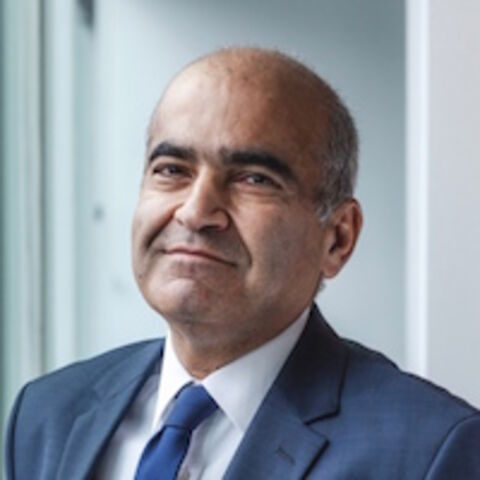

Iranian President Hassan Rouhani has appointed Safdar Hosseini, a former minister of economy in the Mohammad Khatami administration, as the new managing director of the National Development Fund (NDF). This appointment was welcomed by members of parliament that insist on reducing the government’s control over the fund and returning this important institution to its original mission: to translate Iran’s underground wealth to over-ground investments. The change of guards has also led to a debate about the fund’s performance since its inception.
The rethinking process on how to manage Iran’s oil-export revenues started more than a decade ago. The new approach was initiated in the early 2000s by former President Mohammad Khatami, who introduced the Oil Stabilization Fund (OSF) as a mechanism to compel the government not to allocate all oil-export revenues to current expenditure. In the new system, only a budgeted amount of oil revenues would flow into the treasury with the surplus allocated to the OSF for strategic investments to spur economic growth, including loans to the private sector. In July 2005, when Khatami passed on the government to his successor, Mahmoud Ahmadinejad, the OSF had a balance of $14 billion. However, the Ahmadinejad government, which came to an end this year, managed to misappropriate the OSF by utilizing its resources for ongoing government expenditure, especially in financing the shortfalls of the subsidy reforms it initiated in 2010. In early 2011, the Iranian media reported that the OSF balance stood at zero, a statement that was later confirmed indirectly by government officials.
In order to lock away some of the excess funds, in March 2011 (coinciding with the commencement of the its fifth Five-Year Plan), Iran introduced the NDF. It was decided that a minimum of 20% of the country’s oil- and gas-export revenues would be injected into this fund, which would only be available for long-term capital investments (especially strategic and hi-tech investments). According to the state entity that manages the NDF, the fund “aims to turn some of the country's revenue earned by selling oil, gas, condensate and oil products to durable wealth, productivity, economic incentive and capital. The NDF also aims to preserve the share of oil and gas resources and products for future generations.” The original statutes of the NDF further obliged the fund to only extend loan facilities to private or cooperative entities. Companies in which the government has more than 20% ownership are considered governmental, making any entity with 20% or less government control private.
In order to reduce the government’s direct control over the NDF, the fund was entrusted to a board of trustees that includes the following nine officials: president (chairman of the board), vice president in charge of strategic oversight (secretary of the board); representative of the Majles Economic Commission; representative of the Majles Plan and Budget Commission; chief attorney general; minister of finance and economic affairs; minister of cooperatives, labor and social affairs; minister of petroleum and the president of the Iran Chamber of Commerce. It was hoped that despite the heavy footprint of the government, the board could exert some oversight over investment decisions. However, according to Mousavi Largani, one of the Majles representatives in the board, in the previous government, there were no regular board meetings and the fund’s management (appointed by Ahmadinejad) was fully in charge. This meant that the fund ended up being controlled by the Ahmadinejad administration.


