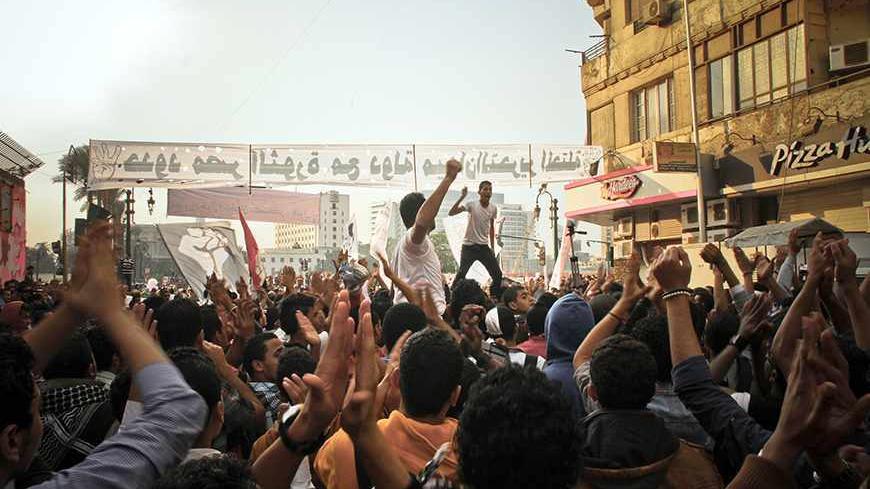
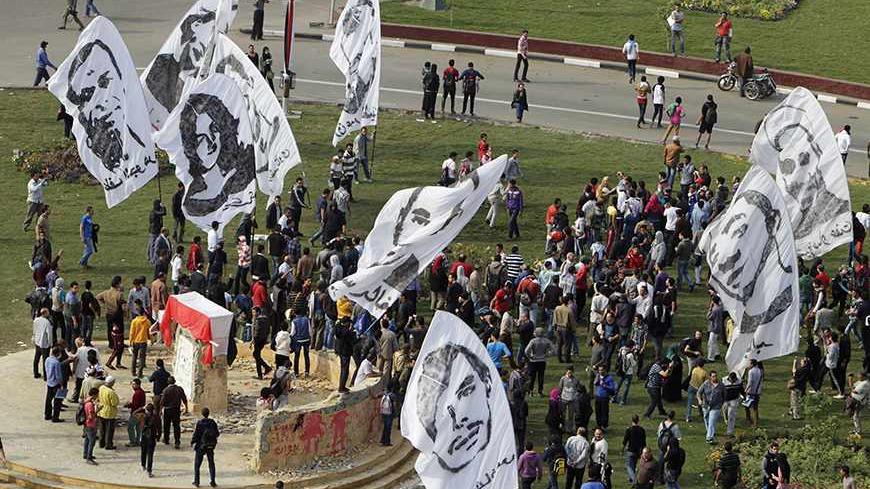
CAIRO — On the evening of Nov. 18, Helmy al-Sayed carried a placard that almost got him kicked out of a march in downtown Cairo. The words on it and the ensuing argument represented the type of problems march organizers wanted to avoid by holding it a day before the second anniversary of the Mohamed Mahmoud Street clashes and away from other events planned by opposing groups.
On that day, the chants were against the security forces, commemorating the five-day clashes in 2011 with the police in which over 45 were killed. Participants angrily ridiculed the announcements by pro-army groups and the police to mark the day. When they read Sayed’s sign, “Army, police and people, together mean the success of the revolution,” they kicked him out.
“I told them I’m a father of a martyr,” Sayed said. His son Mostafa was killed on Dec. 16, 2011, in clashes with the military. Over the past two years, Sayed and his wife would carry a banner with their son’s picture and name during major protests in Tahrir Square. On Nov. 18, some came to his aid. A compromise was reached: He took down the placard and was allowed to stay. He was still furious as he recounted the incident hours later in Abdeen Square, where the short march culminated about 2 kilometers (1.2 miles) from Tahrir Square.
It was the first significant street presence for protesters alienated by the ongoing and deadly struggle between the military-led government and supporters of ousted President Mohammed Morsi. Chants on that night and the following day in Tahrir Square were against both. On Nov. 19, a banner prohibiting the entrance of the remnants of the Mubarak regime, the military and the Muslim Brotherhood hung on the entrance of Mohamed Mahmoud Street from Tahrir Square.
AL-MONITOR All-Access gives you unlimited access to all our journalism, the full Daily Briefing, exclusive interviews, premium newsletters, and live events — for less than $2/week.