Suleiman: Parliament should not boycott presidential election
Lebanese President Michel Suleiman criticized Hezbollah for going to fight in Syria and called for fixing some of the constitution’s flaws.
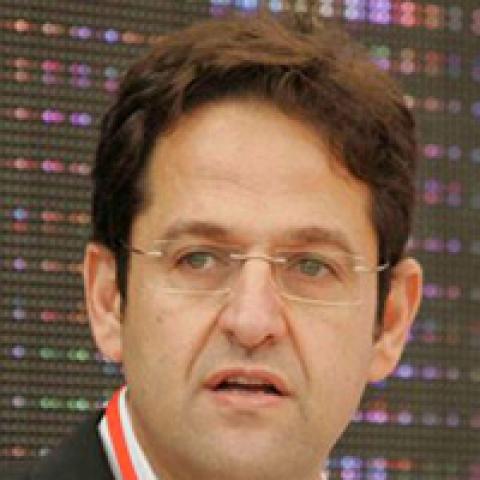

The Dec. 8 speech by Lebanese President Michel Suleiman in the Baabda Palace was no ordinary one. His words were few, but highly meaningful in clarifying key concepts. Some of those concepts were already known, while others have been promoted by the president and have become a main feature of his presidency.
The president’s speech encapsulated his six years of experience as head of state. He gave ideas on how to get out of the gridlock and strengthen the social safety and political development of Lebanon’s political system. If Suleiman’s reign can be summarized in one feature, it may be his tireless efforts to keep Lebanon neutral toward regional conflicts. That was the essence of the Baabda Declaration, a document that not only was approved by all Lebanese parties, but also formed the basis over which the international powers met in support of Lebanon in a New York conference last month. That conference was one of the declaration’s most prominent manifestations.
While the busts of the 12 presidents since Lebanon’s independence were being uncovered, Suleiman spoke about the crises that the country has passed through since independence. All the crises had a common theme: the Lebanese people disagree about foreign policy, about Lebanon’s position in the Middle East’s conflicts and about Lebanon’s role regarding the emerging regional powers. Suleiman talked about the volcanoes that have erupted whenever the Lebanese have abandoned their neutrality and drifted toward the deadly “game of the axes.” This happened in 1958 with the rise of Nasserism, which brought Lebanon to the brink of civil war, and in 1969 with the dispute over the Palestinian resistance’s weapons. That later crisis paralyzed the country and led to the signing of the Cairo Agreement, the first stab inflicted against the state. The Cairo Agreement legitimized armed groups being above the state, thus upsetting the country’s balances and resulting in the civil war that erupted in 1975.
This disagreement over foreign policy was no more than a reflection of the country’s identity crisis, which has never been resolved. It is the original sin; the sin of not clearly deciding on the country’s role and message.


