Erdogan counts on Karaman’s Islamic counsel
Hayrettin Karaman is the ruling AKP’s Islamic jurist of choice.
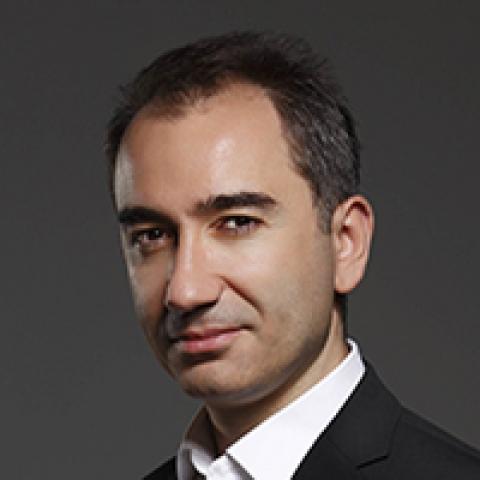

On the night of Jan. 25, Turkish Prime Minister Recep Tayyip Erdogan spoke at an Istanbul conference organized by Turkey's Directorate of Religious Affairs. In the midst of dozens of Islamic theologians and clerics, he condemned “false prophets” in a thinly veiled reference to Fethullah Gulen, another Islamic scholar who Erdogan in fact used to respect. Meanwhile, he praised the scholars around him and presented them with awards. The most notable among this group was the man who posed for pictures at Erdogan's right: Hayrettin Karaman.
This juxtaposition was no accident, for Karaman’s religious views are an important guide for Erdogan's ruling Justice and Development Party (AKP). To make an analogy, one can even say that if the Egyptian Muslim Brotherhood has the Egyptian Islamic scholar Yusuf al-Qaradawi as its religious touchstone, the relatively more modern and progressive AKP has the relatively more modern and progressive Karaman.
Karaman is not a turban-donning cleric, but a professor emeritus of Islamic law who used to teach at the College of Theology of Marmara University in Istanbul until 2001, when he asked for early retirement in protest of the military-imposed and authoritarian secularism of the university. Since then, he has written a triweekly column in Yeni Safak, an Islamist daily newspaper and ardent supporter of the AKP government. His pieces often deal with religious issues, especially matters of jurisprudence, and is widely regarded as an authority on the topic. An argument he often repeats is that Muslims should ideally live under Islamic states, but they can live under secular states (such as Turkey) as well. They just should make sure that they live and act according to the rules and principles of Islam — in every field, including politics.
Such views are naturally shocking to Turkey’s secularists, who believe in an absolute separation between religion and politics, but one must note that Karaman has some reformist views on Islamic law that are refreshing from a liberal perspective. Over the years, for example, he has defended some unorthodox views such as that Christians and Jews can be “saved” in the afterlife, that apostasy from Islam should not be punished and that non-Muslims should be free to follow their “un-Islamic beliefs and practices” even in an Islamic state. He has also argued that the right Islamic political vision is “a world in which freedom of religion and conscience is established, and thus the choice of religion and religious life is based on genuine faith, not oppression.”


