Iran diversifies its Palestinian strategy
Iran is sending a message to the Palestinian parties, Israel and the region about its role on the Israeli-Palestinian fault line.
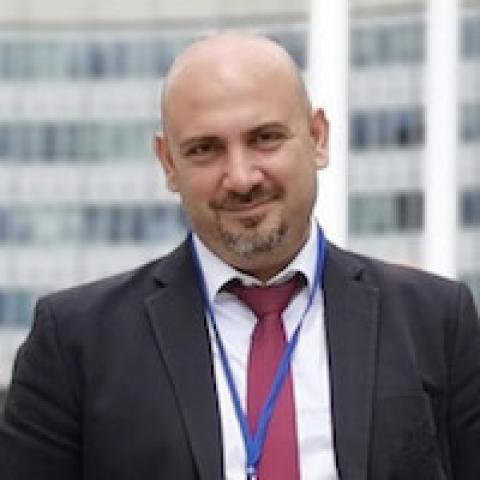

For years, relations between Iran and the Palestinian factions was mainly with Hamas, the Islamic Jihad and relatively with Ahmad Jibril’s branch of the Popular Front for the Liberation of Palestine (PFLP). For years this situation continued, until Jibril Rajoub, deputy secretary of Fatah’s Central Committee and former head of the Palestinian Authority (PA) preventive security force, arrived on Jan. 28 in Tehran on a visit — that surprised many — to meet Iranian officials.
Iran’s revolutionaries and Fatah enjoyed strong relations before and during the revolution, but after the shah's fall and the formation of the new Islamic Republic of Iran things started to change, and within a year or two the alliance that brought together men such as Mustafa Shemran, Iran’s slain defense minister, and Abu Jihad, Fatah’s official who was later assassinated, went along with the regional developments. Only few Fatah leaders have come to Iran since then, but a few years later Hamas and Islamic Jihad emerged as Iran’s adopted sons in Palestine.
Until March 15, 2011, Iran, Syria, Hezbollah, Hamas and Islamic Jihad formed the resistance bloc in the region. Hamas’ political bureau and its head Khaled Meshaal resided in Damascus, and so did Islamic Jihad’s secretary-general Ramadan Shallah. After the start of the revolution in Syria things changed gradually; Hamas tried to mediate in the beginning between the Bashar al-Assad regime and the opposition — mainly the Syrian Muslim Brotherhood — but when the mediation failed Hamas found itself deserting the resistance bloc. Relations with Iran subsequently cooled down, though Hamas’ office in Tehran continues to operate. Visits by Hamas officials to the Iranian capital did not stop, though they have become fewer over time.
Islamic Jihad distanced itself from the Syrian crisis, calling on all parties to solve their problems through dialogue. Islamic Jihad’s officials, despite there not being a consensus on the situation in Syria, agreed that the resistance is their priority and that they do not want to meddle in the Syrian crisis. Shallah is univocal when it comes to Iran. A famous incident between him and Meshaal took place in Cairo amid the 2012 war in the Gaza Strip, when Shallah thanked Iran and Meshaal was hesitant to, a senior Arab journalist who met both men said. Shallah warned Meshaal that he has to thank Iran for providing support or else he would not talk.


