Palestinian entrepreneur returns to build new city in West Bank
Palestinian entrepreneur Bashar al-Masri explains his vision for the West Bank town of Rawabi.
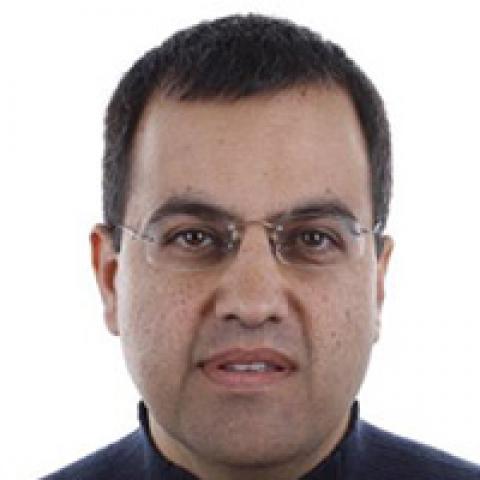

RABAWI, West Bank — “I have two daughters, and Rawabi is the third,” says Palestinian entrepreneur Bashar al-Masri as he climbs the stairs to a sample apartment in a residential project in the city of Rawabi. Located on the second floor, it is a 182-square-meter (1,959-square-foot) unit that costs $110,000. Apartments in nearby Ramallah cost 20-30% more. In East Jerusalem, they are twice as expensive. In Tel Aviv, an apartment like this would cost 10 times as much or more. Still, Masri is building at the same rapid pace that he uses to skip from floor to floor. As of today, 650 units have been sold, and there are still plenty of opportunities.
Masri looks out at the landscape from the balcony. There, on the horizon, to the northwest of the apartment, he points out to the Hadera power station. To the southwest, he can see the port in Ashdod. On a clear day, the skyscrapers of Tel Aviv are visible. “We’re right in the middle,” Masri exclaims proudly. ''Nablus is just 25 km (15.5 miles) away. So is Jerusalem. Tel Aviv is 40 km; Amman is 70 km.''
In many ways, Masri is making history. The project that I visited Feb. 13, initiated in Area A just north of Ramallah in the heart of the West Bank, is the first Palestinian city to be planned from inception. Originally, Masri's model was the Israeli city of Modi’in, which was also planned down to the smallest detail. “We learned a lot from Modi’in, and we continue to visit there,” he says. “The most important thing that we took from them is the importance of creating places to work. We are also learning from the people purchasing apartments. They have demands.”
Masri is the founder and owner of Massar International, a holding company that specializes in real estate, finance and agriculture. He is the spirit behind Rawabi — which means hills in Arabic. In the first stage, 6,000 housing units are being constructed for 25,000 people. The first families are scheduled to move in over the course of 2014. Masri shares his investment in Rawabi with the Qatari investment firm Diar, which also has a stake in construction in Great Britain, Yemen and Tajikistan. Massar (“Path”), is considered to be the largest private employer in the West Bank.


