Head of Lebanon’s Islamic Group opposes any intervention in Syria
In an interview with Al-Monitor, Azzam al-Ayoubi, head of the political bureau of the Islamic Group in Lebanon, said that his party has no official ties with Hezbollah and revealed that Saudi Arabia had assured his organization that it would not be included on its expanded terrorism list.
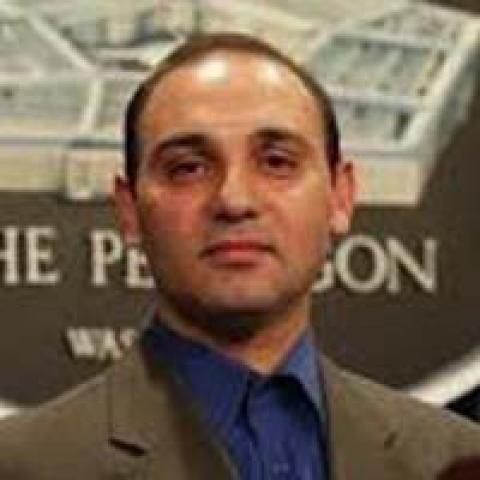

The Islamic Group, a branch of the Muslim Brotherhood, became the first Islamic organization in Lebanon when the Abad Al Rahman Group — founded in in 1950 in Beirut by Mohammad Omar Daouk along with a group of Islamists in Tripoli, most notably Fathi Yakan — adopted an Islamic current. This occurred after Mustafa Sibai, comptroller general of the Muslim Brotherhood in Syria, took refuge in Lebanon in 1952. Al-Monitor recently conducted a phone interview with Azzam al-Ayoubi, head of the Islamic Group's political bureau, to discuss the group's current status and its position on Lebanese and Arab developments.
Ayoubi confirmed that the Islamic Group participated in the first round of elections in parliament to select a president, but refused to disclose whether its representative, Imad Hout, had voted for Samir Geagea, head of the executive body of the Lebanese Forces Party. Sources close to the Islamic Group, however, told Al-Monitor that Hout had cast a blank ballot, in contrast to the March 14 Alliance, whose members generally voted for Geagea and with which the group has been affiliated.
Ayoubi told Al-Monitor that his party nonetheless supports Geagea's electoral program, but also said that it "does not have reservations about relations with Geagea" despite his supposed involvement in the assassination of Prime Minister Rashid Karami. According to Ayoubi, "This subject is no longer an issue after the closing of the book on the Lebanese civil war. Geagea is like other [former] warlords."
Regarding the Islamic Group's position in the Lebanese arena, Ayoubi rejected the characterization that it is in a state of decline. Rather, he said, it is "relatively weak compared to other political forces that enjoy foreign support." He noted that the group is "larger and more powerful [than in the past] and is spread across all regions of Lebanon. It is in a good situation, which did not exist in previous years."


