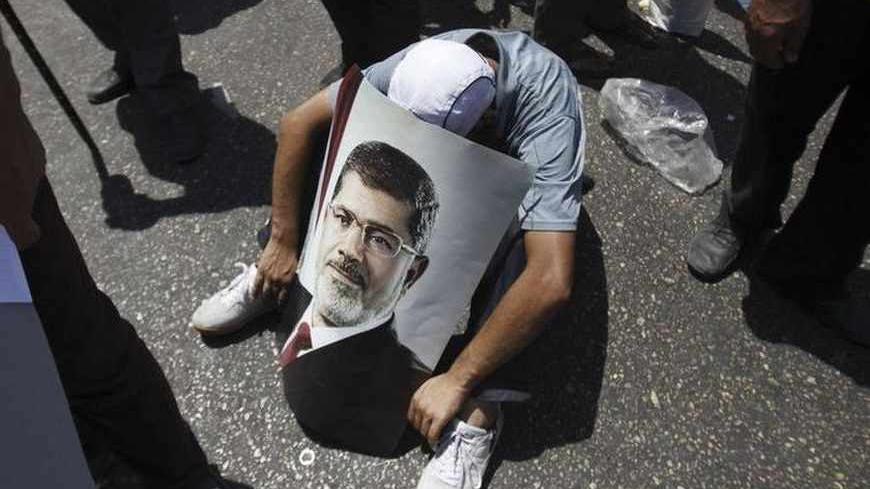
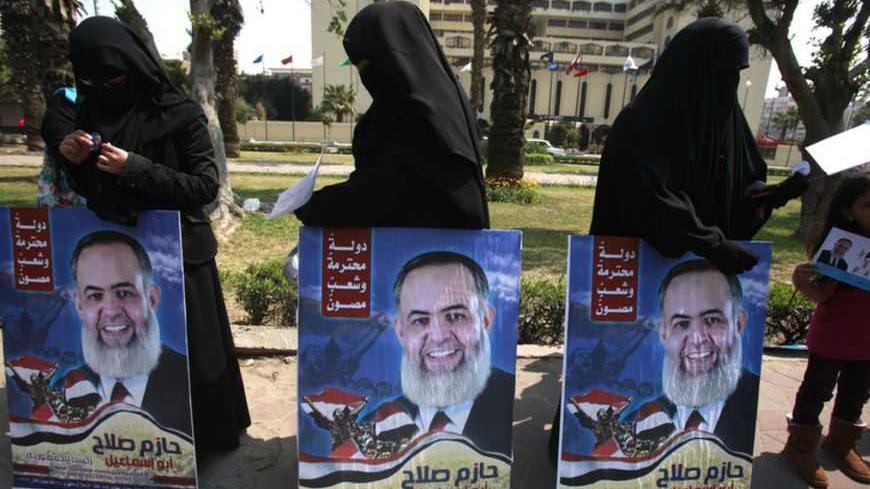
CAIRO — The ambitions for the Nour Party, Egypt’s remaining Islamist political faction, today appear more volatile than ever. Since Mohammed Morsi’s ouster on July 3, 2013, and the Muslim Brotherhood’s subsequent fall, negative sentiments toward Islamist parties have filled Egyptian streets, amplified by the rise in related terror attacks. Anti-Islamist policies expressed by the popular presidential candidate Abdel Fattah al-Sisi, who holds 76% of the constituency in the latest Baseera poll, further reflect the general climate of disdain surrounding Islamist parties. During his first televised appearance, Sisi reasserted his hard-line policies toward the Muslim Brotherhood and militant Islamists and his intent to apply legislation, namely Article 6 of the 2014 constitution, prohibiting the formation of a religious-based party.
Political Islam’s evident regression has caused the Salafist Nour Party to pay heavily in its reputation and constituent support, and explains its political detachment from the Islamist current.
“We are not a religious party. We are complying 100% with the constitution,” Amr Farouk, Nour’s assistant chairman for foreign affairs, told Al-Monitor, affirming that a religious party would divide Egyptians, which contradicts Nour’s principles.
The party’s pragmatism and newly extended support for Sisi’s presidential run is paramount for its survival, say observers. In a statement published on the party's Facebook page, party Chairman Younes Makhion revealed that Sisi was voted for by an overwhelming majority of members. Despite the party’s declared support, some key members, namely Nour’s co-founder Nader Bakkar, have not shied away from discrediting Sisi’s presidential campaign.
AL-MONITOR All-Access gives you unlimited access to all our journalism, the full Daily Briefing, exclusive interviews, premium newsletters, and live events — for less than $2/week.