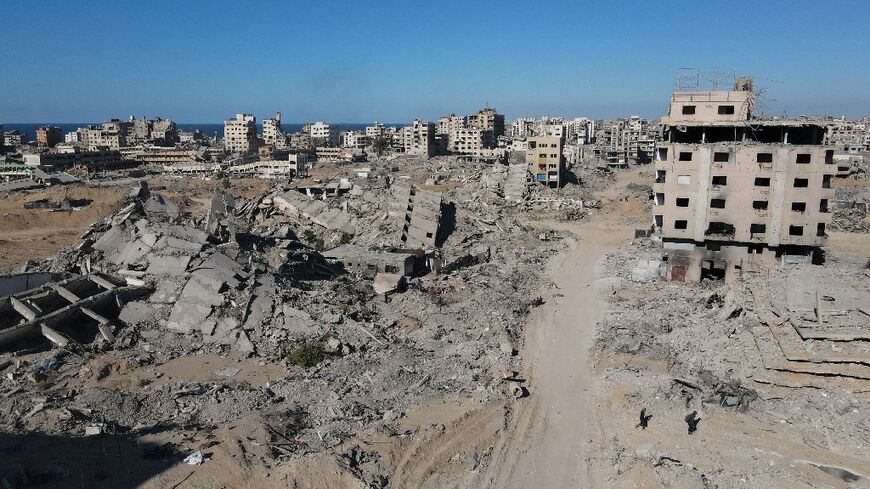
On Aug. 19, Israel attempted to assassinate the “head of the snake” — Mohammed Deif, commander of Hamas’ military wing. As I’m writing this (on Aug. 21), it remains unclear whether the attempt succeeded. Hamas denies Deif was harmed. But there are growing indications to suggest that Deif was indeed inside the bombed building in Gaza City's Sheik Radwan neighborhood. If he was inside, there’s no way he could have survived the attack. All that was left of this multistory building is a pile of rubble. Unlike the past, this time Israel had no second thoughts about which armament to use. The building was razed with one-ton bombs to ensure that if Deif was inside, he would stand no chance of survival.
Two days later, in the early morning hours of Aug. 21, the Israel Defense Forces (IDF) killed three other senior Hamas militants — Mohammed Abu Shamalah, Raed al-Attar and Mohammed Barhum. Shamalah was said to be the chief of Hamas’ “southern command,” whereas Attar was the equivalent of a brigade commander.
Is this the victory photo that Israeli Prime Minister Benjamin Netanyahu had been waiting for? Is this the tiebreaker that will finally force Hamas to fold and end the current round of hostilities without having scored any significant achievements? We will find out in the coming days.
Meanwhile, it's time to deal with the broader picture, namely the watershed and grizzly affair that the world — or at least large parts of it — has experienced. “The beheading of journalist James Foley is another step before the penny finally drops in the West,” an Israeli, who until recently held a senior and central defense position, told me. “I don’t think that the West fully comprehends who we’re fighting with here. But I do think that this will happen at some point, and that it won’t be before too long.”
AL-MONITOR All-Access gives you unlimited access to all our journalism, the full Daily Briefing, exclusive interviews, premium newsletters, and live events — for less than $2/week.