In recent months, an increasing wave of worker strikes in Iran has challenged President Hassan Rouhani and his administration. Workers have gone on strike for several reasons, mostly due to the failure to pay back-payments, at the Haft-Tappe sugar factory, Bandar Imam Petrochemicals, Gilana tile factory and the Assaluyeh natural gas company. The miners' strike at Bafgh in central Iran, however, appears to be a special case.
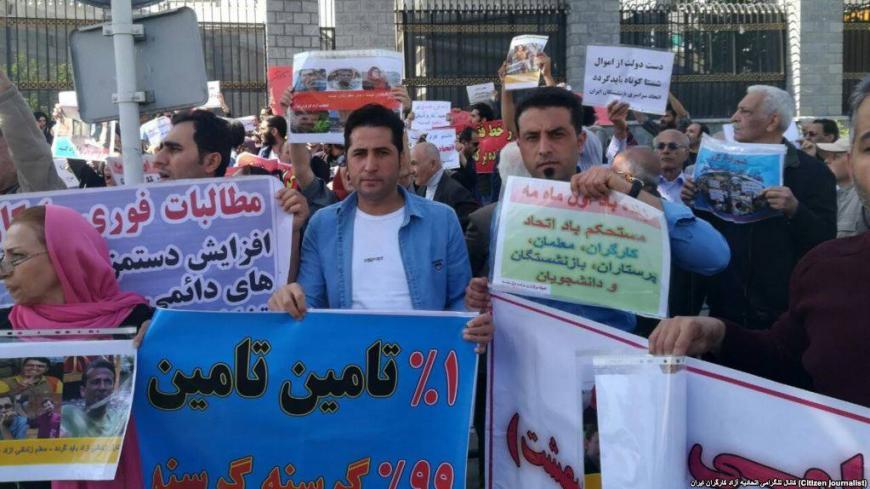
At Bafgh, 5,000 workers have gone on strike twice. Several workers have been arrested, and the presence of the police indicates that these strikes have become a serious issue, only resolved with the government’s retreat. Yet, these strikes also reveal workers' fears over privatization.
The miners initiated the strike on May 17 in opposition to the transfer of 28% of the mine’s shares to the private sector. This transfer followed the decision of Iran's minister of industry, mines and trade, Mohammadreza Nematzadeh, to gradually transfer the control of the mines to private entities. Since 2000, more than 70% of this mine's shares had been sold to private investors, so the announcement regarding the remaining 28% angered the workers. The strike lasted until June 24 and only ended after issuing the government a two-month ultimatum to reconsider its position.
However, toward the end of August, just before the end of the ultimatum period, arrest warrants were issued for 18 workers, with some being taken into custody. On Aug. 19, the miners staged a second strike to protest the arrest of two of their comrades, Ali Sabri and Amirhossein Kargaran.
AL-MONITOR All-Access gives you unlimited access to all our journalism, the full Daily Briefing, exclusive interviews, premium newsletters, and live events — for less than $2/week.