Israel offers to mediate talks between Ukraine, Russia
Israel's Foreign Minister Avigdor Liberman believes his country is uniquely positioned to negotiate with Russia and Ukraine.
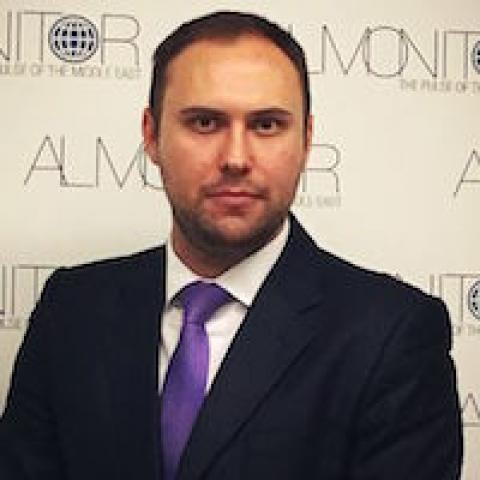

On Jan. 26, Israeli Foreign Minister Avigdor Liberman visited Moscow to meet his Russian counterpart, Sergey Lavrov. While the encounter took place during the 70th anniversary observance of the Soviet liberation of Auschwitz, the two diplomats took the opportunity to check up on their busy bilateral agenda. They touched primarily on six main issues — the overall situation in the Middle East, Russia's role in the region, the course of the “5+1” negotiations on Iranian nuclear program, Lebanon, the situation in Syria, and the Israeli-Palestinian conflict. On the eve of his meeting with the Russian foreign minister, in an interview with the Russian media agency RIA Novosti, Liberman said Israel would be prepared, if necessary, to mediate peace talks between Russia and Ukraine.
The statement drew mixed reactions from both Israel and Russia, but the very intent, if it is at all serious, could be interesting to think about.
Over the more than yearlong conflict in Ukraine, Israel turned out to be neutral when it comes to Russia’s actions in its neighboring country. Israel's diplomats were not present during the vote on the US-supported UN resolution condemning Russia’s annexation of Crimea, which made it look as if Israel were avoiding showing its stance on the issue. Although Tel Aviv explained that the vote coincided with a strike of Israel’s foreign affairs workers, few believed this explanation. Later, Israel refused to join the US-led sanctions regime against Russia. In both instances, the Obama administration, which cannot boast good relations with the Netanyahu government, took it as a sign of ingratitude toward Israel’s prime strategic ally at a time when America needed it most.
Essentially, while certainly not an act of support for Russian policies, it also was a sign of no opposition. At the initial stages of the war in Ukraine, in early 2014, the Israeli foreign minister, speaking on a TV program, said that “everybody understands that the situation [in Ukraine] is about standing up for the interests of each party [Russia and the US] in accordance with their own foreign policy courses.” That was a message that Israelis see the situation as a conflict of interests, not a conflict of principles. At the same interview, he declined any meddling with this conflict as a mediator between Russia and the US over Ukraine, saying Israel had enough to worry about with its own challenges.


