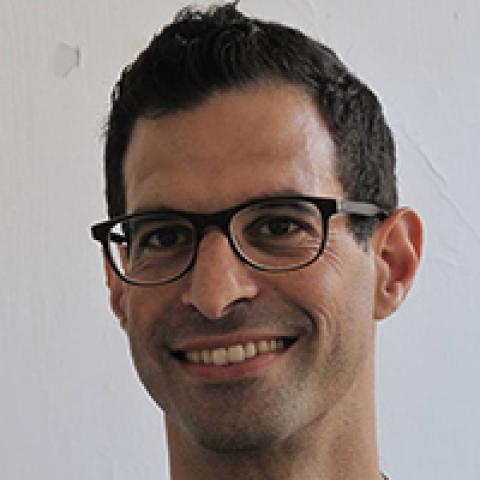
When Shaindy Babad, an ultra-Orthodox American immigrant, arrived in Israel in 1994, she decided that she wanted to work in a high-tech company. At the time, it was still not commonly accepted for ultra-Orthodox women in Israel to enter the workforce. “I worked as a secretary, and my salary was 11.9 shekels [about $3] per hour, which was then the minimum wage,” she recalls. “I spent 12 years working for the company, and ended up a manager.”
While the general employment rate of Israeli women has stood at a steady 75% for the past few years, the employment rate of ultra-Orthodox women has been growing consistently. In the second quarter of 2014, for instance, it reached 79.5%, surpassing the overall number of women employed nationally, according to figures provided by the Central Bureau of Statistics. Yet Babad believes that these figures might be a little misleading: “Even people who work for two hours a week are defined as employed, and it goes without saying that those people are not earning a livelihood. As far as I am concerned, an ultra-Orthodox woman who has a part-time job is not part of the workforce.”
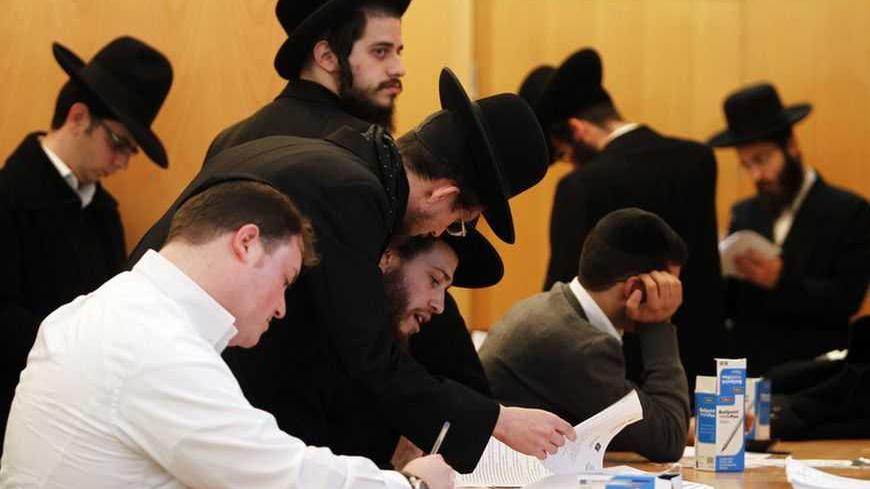
While some rabbis are unhappy with the idea of ultra-Orthodox women working in secular environments, the economic situation in Israel has forced the ultra-Orthodox community to go to work. When it comes down to deciding whether to send rabbinical students or women into the labor force, the ultra-Orthodox establishment chooses women. “The default choice of ultra-Orthodox society when faced with economic challenges is to send women into the workforce first, in order to ensure that the husband continues studying Torah,” says Shahar Ilan, the deputy director of research for Hiddush, the Association for Religious Freedom and Equality.
Babad deserves credit for at least part of this change. She is the general manager of Temech, an organization that helps ultra-Orthodox women integrate into the workforce. “We operate on several levels,” she says, “training the community, promoting ultra-Orthodox staff among potential employers, networking within the community and supporting businesses and new initiatives started by ultra-Orthodox women. There are always ultra-Orthodox women looking for work.” According to her, over the past five years alone the organization has helped some 5,000 women find jobs, and she thinks that once companies have already hired ultra-Orthodox women through her organization, they continue to do so independently. “That is one of the organization's goals. We want them not to need us anymore,” she declares emphatically.
AL-MONITOR All-Access gives you unlimited access to all our journalism, the full Daily Briefing, exclusive interviews, premium newsletters, and live events — for less than $2/week.