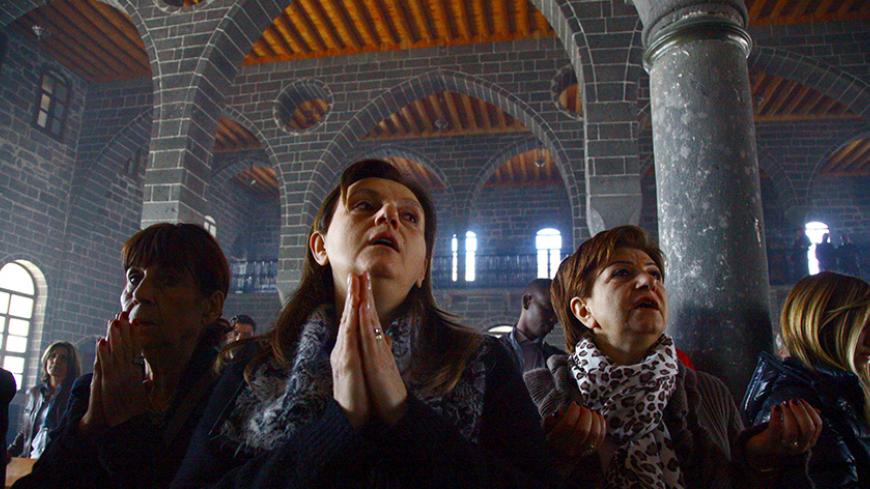
DIYARBAKIR, Turkey — With their feet on broken stones among high weeds, a group of Armenians from all over the world stands together in prayer. They are inside the Surp Sarkis Church in the historical center of Diyarbakir in southeast Turkey. Although "inside" is relative: Only the walls are standing, the columns and the arches.
Although this place of worship is decaying, the memory of the Armenians is brought to life again, precisely here in the region where so many lost their lives in the massacres of 1915. The Kurdish political movement acknowledges that a genocide took place on these lands and facilitates the revival of Armenian culture in any way they can.
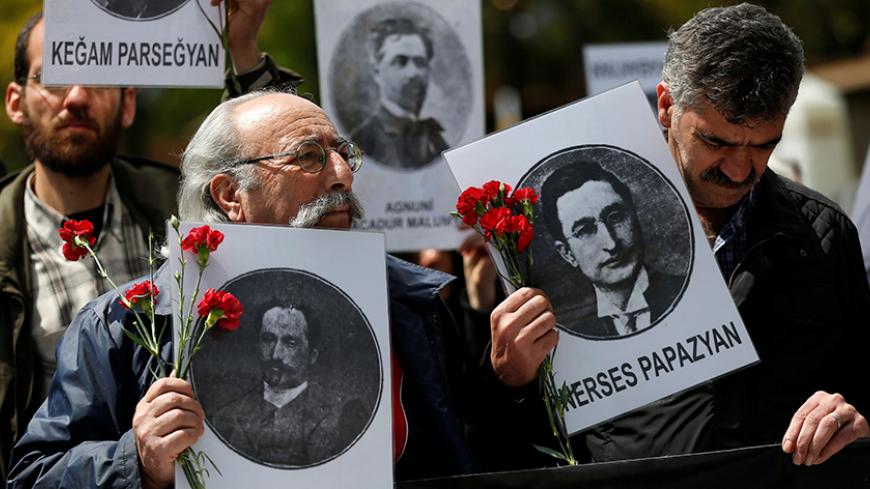
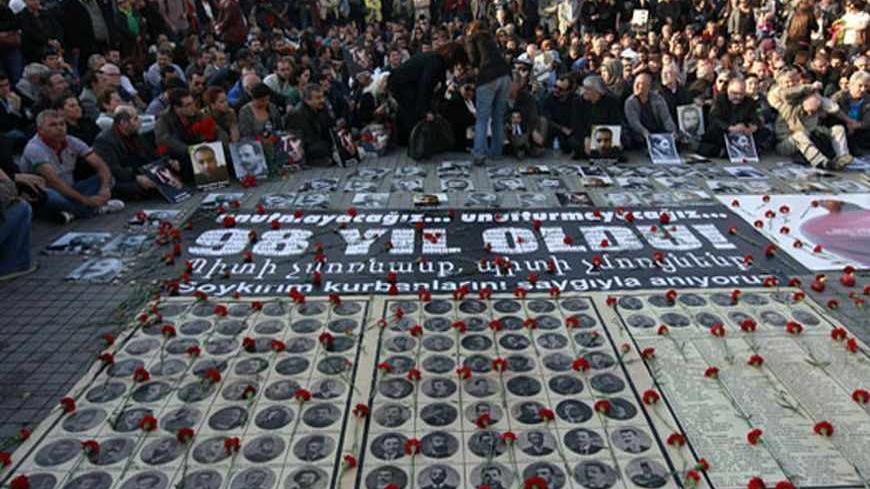
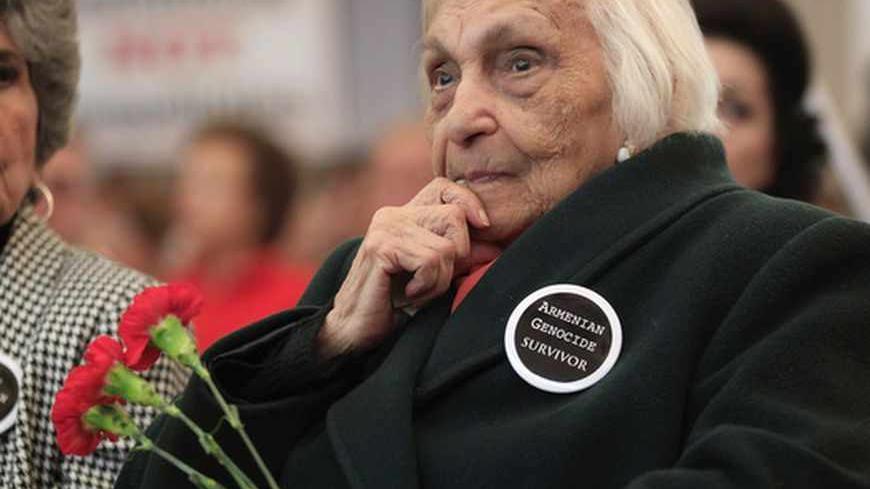
The beginning of the Armenian genocide is marked on April 24, 1915, the day nearly 300 Armenian intellectuals in Istanbul were arrested and later executed. In southeast Turkey, the massacres started earlier that year.
The massacres came as no surprise to many. As early as the late 19th century, Armenians were rounded up and killed in the Ottoman Empire, also in Diyarbakir. The Ottomans thought centralizing power and "Turkifying" the nation would impede the collapse of the empire. Armenians were looked upon with great suspicion: They were outsiders ethnically and religiously. By the time World War I started, some Armenian political groups sided with Christian Russia, the Ottoman Empires’s enemy. To eliminate the perceived threat, all Armenians were targeted.
AL-MONITOR All-Access gives you unlimited access to all our journalism, the full Daily Briefing, exclusive interviews, premium newsletters, and live events — for less than $2/week.