Will Abdullah Gul return to politics?
Following the Justice and Development Party's loss of its parliamentary majority, eyes and ears have turned to the former president and AKP co-founder amid speculation about his next move.
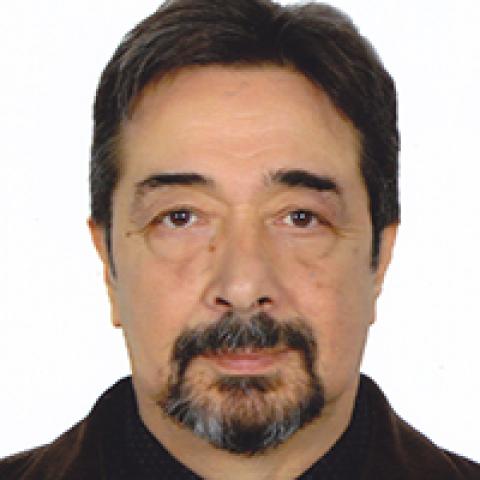

Former Turkish President Abdullah Gul is back in the news following the Justice and Development Party's (AKP) loss of the parliamentary majority it had enjoyed for more than 12 years, an unexpected development that has left it facing the prospect of joining a coalition or opting for early elections. There is much talk about Gul taking over the AKP after incumbent Prime Minister Ahmet Davutoglu’s poor electoral performance. Gul, along with President Recep Tayyip Erdogan, is a founding member of the AKP and still has a base of support within the party. He appears happy, however, to sit on the fence for now, responding indifferently to the question of returning to active politics.
For the time being, Gul prefers the role of the veteran politician who dispenses words of political wisdom for the sake of the country's stability. According to media reports, Gul called Erdogan and Davutoglu after the June 7 vote to urge them not to push for early elections, but to concentrate on a workable coalition to head off further political uncertainty.
In the meantime, revelations about Gul’s presidency in “12 Years with Abdullah Gul,” a book just published by his former aide Ahmet Sever, has stirred the cauldron at this sensitive moment, fueling speculation about Gul’s political future. The book highlights the political rift between Gul and Erdogan on issues pertaining to democracy and the rule of law, especially after the nationwide demonstrations in 2013 surrounding the Gezi Park protests and the corruption probes later that year involving key government ministers during Erdogan's tenure as prime minister. Prosecutors had sought to question Erdogan’s son Bilal in connection with the charges, which were subsequently dropped as a result of legislative changes and blatant intervention by the AKP government in the judiciary and police.
Sever argues that despite the growing rift, Gul preferred to remain silent for the sake of Turkey's political stability, a fact his detractors use against him today. It is no secret, however, that after being elected president in August 2014, Erdogan did not want Gul to head the AKP, and consequently serve as prime minister, for fear that Gul would not be compliant and would instead pose an obstacle to him and his plans to become Turkey’s sole leader. Gul is known to be opposed to tampering with Turkey’s parliamentary system. With the elections, however, circumstances have changed radically, and Erdogan might now have no choice but to accept a formula that puts Gul back on the scene politically.


