Iranian deputy foreign minister reasserts leadership on Syria, confidence in Hezbollah
During a visit to Beirut, Iranian Deputy Foreign Minister Hossein-Amir Abdollahian discussed Lebanese presidential elections and pressing regional issues, including relations between Washington, Riyadh and Moscow concerning Syria and the nuclear agreement.
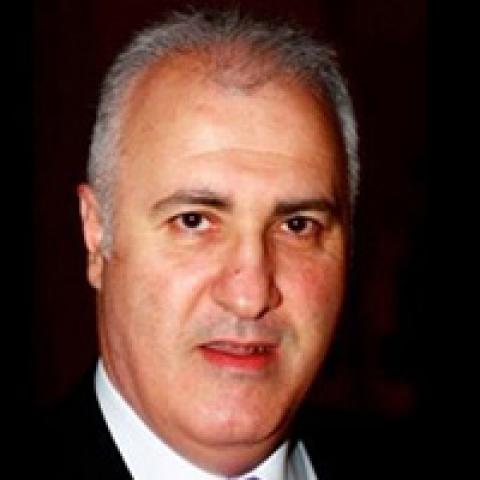

The Sept. 1-2 visit to Beirut by Iranian Deputy Foreign Minister Hossein-Amir Abdollahian was not a mere formality en route to Damascus. Rather, during it, he conveyed several messages to Lebanon, the region and the world. Abdollahian met with a number of Lebanese officials, including Prime Minister Tammam Salam, parliament Speaker Nabih Berri and Foreign Affairs Minister Gebran Bassil in addition to Hezbollah Secretary-General Hassan Nasrallah. The Iranian deputy minister also met with Sigrid Kaag, the UN special coordinator in Lebanon, and Staffan de Mistura, the UN special envoy for Syria.
Sources close to some of the Lebanese officials who met with Abdollahian told Al-Monitor that he went out of his way to reassure them about the consistency of Iranian positions vis-a-vis regional issues in the wake of Tehran's nuclear deal with the six world powers. In discussing the domestic situation in Lebanon, he said the main concern is obviously the presidential vacuum and electing a new president amid fears of foreign, including UN, intervention. On Sept. 2, during Abdollahian's visit, the UN Security Council issued a statement calling on Lebanon to elect a president in the near future.
Those who met with Abdollahian said he insisted that the presidential elections be left in the hands of the Lebanese people without foreign intervention, including from Iran, or pressure on any Lebanese party. A Lebanese official who attended the meetings and spoke on condition of anonymity said that Abdollahian was clear in stating European officials had brought up the presidential elections with Tehran, and that some of them who had recently visited Iran had tried to suggest a deal. The Europeans apparently put forward pressuring Hezbollah on the issue in return for foreign and European promises on other matters, which Abdollahian did not specify. Tehran was firm, however, in ruling out such a possibility, asserting that it has left Lebanese affairs in general, and the presidency in particular, to Hezbollah’s better judgment, under the direct guidance of Supreme Leader Ayatollah Ali Khamenei. No party can cross these lines.
Regarding Syria, the same official revealed that Abdollahian suggested Iran’s current initiative on the Syrian crisis is almost in joint step with Moscow and even Washington. The Iranians alluded that, during talks between Moscow and Riyadh and most probably with Washington as well, Russia had been hesitant on the issue of putting its full weight behind Syrian President Bashar al-Assad staying in power and leading any settlement to the Syrian crisis. Recently, however, Moscow made a firm decision to support Assad remaining in power. This allowed for greater coordination among Russian and Iranian diplomats on the Syrian situation. Although Abdollahian did not say so, the Lebanese official told Al-Monitor that, most likely, due to the Saudi negotiations with Russia in past months — especially after Crown Prince Mohammed bin Salman’s visit to Moscow on June 18 — the Russian stance vis-a-vis Assad’s staying or departing had been vague or unresolved.


