Will Iran's nuclear diplomacy lead to regional solutions?
Will progress on regional issues be achieved if Iran's role in the region is recognized?
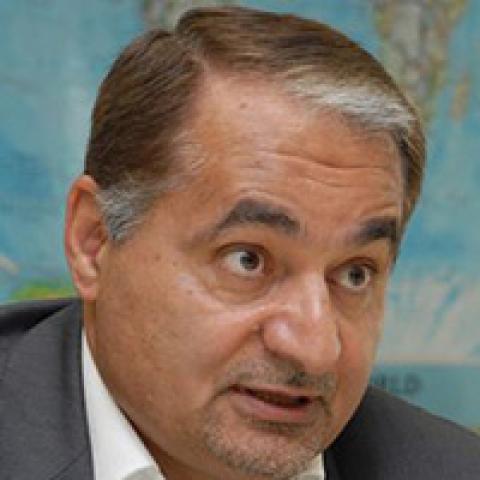

When the dispute over Iran’s nuclear program began in 2003, I was a member of the first Iranian nuclear negotiating team. At the time, Ayatollah Khamenei made it very clear to us that he was supportive of taking steps to conclusively substantiate that Iran’s nuclear program was exclusively for peaceful purposes. He was open to making the nuclear program beholden to the maximum verification measures under international law, and even by constraints, as an unprecedented confidence-building measure. What the ayatollah fiercely rejected was Iran giving up its legitimate right to enjoy the benefits of nuclear technology, and in particular, uranium enrichment at the levels required for peaceful purposes, such as generating nuclear energy. At that time, he even told current President Hassan Rouhani, who was then chief nuclear negotiator, that if Iran were to give up its right to enrichment, it should either come after his death or his resignation as supreme leader.
The nuclear negotiations between Iran and European powers during the latter years of the presidency of Mohammad Khatami, from 2003 to 2005, failed principally because the United States was not willing to accept Iran’s right under the Nuclear Non-Proliferation Treaty to enrich uranium for peaceful purposes, while Iran’s negotiators were not allowed to engage in direct negotiations with the United States about the nuclear issue.
Ayatollah Khamenei first permitted direct negotiations between Iran and the United States on the nuclear issue after US President Barack Obama came into office, during the presidency of Mahmoud Ahmadinejad. Direct talks were held first in Vienna in 2009 and continued in Muscat in 2012. With the election of Rouhani in June 2013, a more professional nuclear negotiating team was appointed and a more favorable international political climate for serious negotiations was created. To accommodate a nuclear deal, Ayatollah Khamenei gave permission again for direct talks between Iran and United States, allowing for the bilateral negotiations that proved to be the critical prerequisite to the nuclear deal to eventually be reached.
Indeed, it is of crucial importance to note that the Rouhani administration would not have been able to reach and uphold the nuclear deal without the support of Ayatollah Khamenei. Hard-line domestic opponents of Rouhani would have certainly killed the deal if not for the supreme leader’s explicit support for the administration and nuclear negotiators. When the parliament was debating the nuclear deal these past several months, I was in Iran and witnessed firsthand the bellicose nature of the opposition. The rhetoric reached such a level of hostility that at one point a hard-line parliament member menaced Foreign Minister Mohammad Javad Zarif, threatening to put him and Iran’s Atomic Energy Organization head Ali Akbar Salehi in the “heart” of Iran’s plutonium reactor and “bury” them “in cement.”


