The Iraqi military's hasty self-congratulatory statements of victory in Ramadi are as misleading as the international chorus that echoes them, envisaging a routing-in-the-making of the Islamic State (IS). Just as the United States had made three different anticlimactic announcements of its withdrawal from a "stabilized and democratized" Iraq (in November 2008, in February 2009 and in August 2010), only to be back with additional troops in June 2014 and more troops a year later, the US-trained Iraqi military declared months ago that it had forced IS from parts of Ramadi and was on the offensive to retake it and announced that the city was about to fall in its hands.
Beyond their time-honored shortsightedness, there is something particularly arresting about the latest victory narratives: They betray a vividly impatient desire on the part of the Iraqi authorities and their regional and international allies to paint a victory — any victory — against IS at the price of far-sighted strategy, realistic assessment and lessons learned — and that, in itself, is an indication of how much genuine and innovative effort will be needed from them to decisively battle IS in the long run.
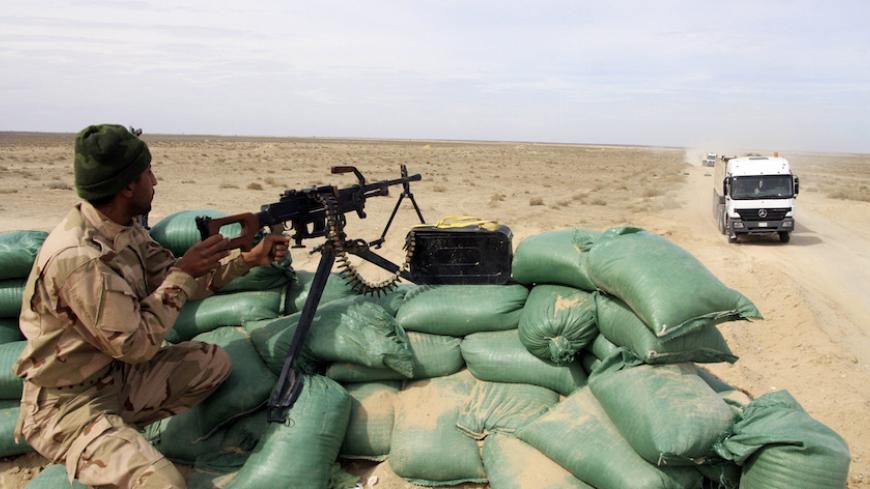
Invariably, military bombast is smokescreen for lack of operational closure, and this Anbari episode is no exception. For at least three reasons, the push into Ramadi cannot yet be regarded as decisive. First, it took the Iraqi military seven long months — since May 2015 — to make progress into the central neighborhoods of the city. Since the past summer, with the help of the US Air Force, Baghdad has been repeatedly unable to dislodge IS militants. A state military force deploying the latest weapons, operationally supported by the United States with air cover and, reportedly, ground troops, accompanied by Iran’s top military commanders, US-armed tribesmen and led by vengeful sectarian militias has been haphazardly fighting for more than half a year for a mid-size city 100 kilometers (60 miles) from Baghdad that it should not have lost in the first place and which was seized as an afterthought by a nonstate armed group that had already won the prize in Mosul.
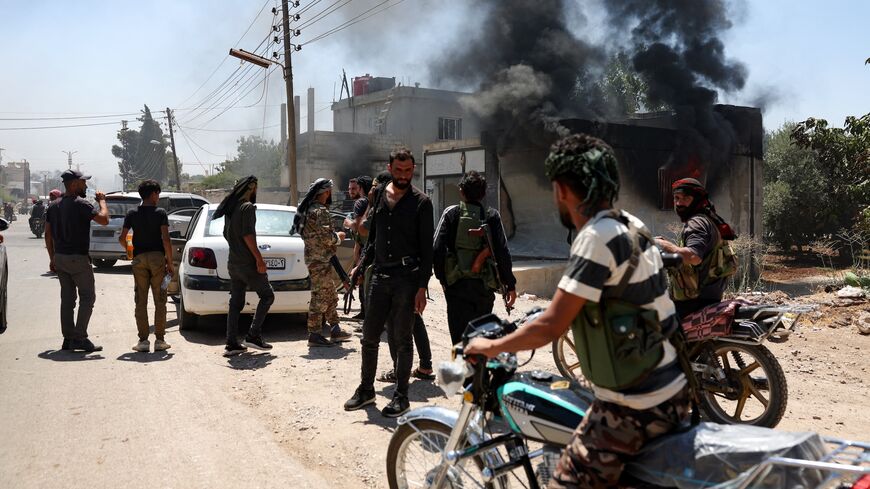
Second, since Ramadi has been declared "liberated," IS has stepped up its urban guerrilla tactics with deadly results for the elite Iraqi troops. Observer tribesmen claim that the group still controls a third of the city, and there are reports of neighborhoods with the IS flag flying within a hundred meters of the national troops. In the midst of a devastated city, we are at best looking at a prolonged tit-for-tat phase of factional advance-and-retreat cycles previously witnessed elsewhere, notably in Fallujah. In truth, the price paid by the Iraqi military and the US forces in Ramadi is already too high. The strategy they worked on for the past months is now known to IS, which wasted no time in switching in situ to suicide-attack mode and withdrew its fighters to "stretch the enemy," keeping them in expectation of a possible counterattack. There are already indications of the Iraqi authorities overplaying their hand with statements that IS will be defeated in 2016 and Mosul is next.
AL-MONITOR All-Access gives you unlimited access to all our journalism, the full Daily Briefing, exclusive interviews, premium newsletters, and live events — for less than $2/week.