AKP moderate declared 'traitor'
The "Arinc rebellion" against President Recep Tayyip Erdogan seems to be the much-belated outburst of the much-speculated silent opposition within the AKP. But what is it likely to achieve?
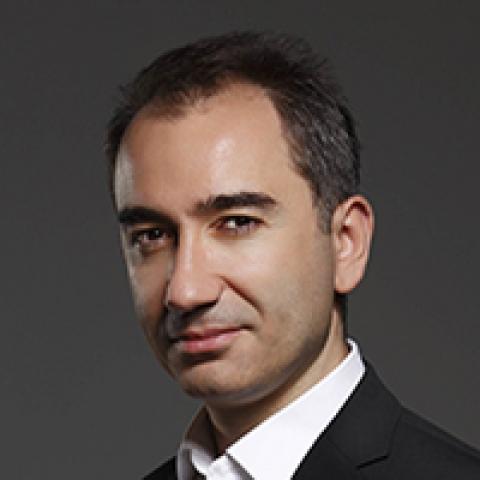

On the evening of Jan. 29, the now retired politician Bulent Arinc, the longtime deputy prime minister and parliament speaker of the Justice and Development Party (AKP), appeared on a CNNTurk talk show with remarks that sent shock waves through Turkish politics. He spoke on various issues, from the failed peace process with Kurdish separatists to the witch hunt on “the parallel state,” to the “trolls” who demonize people on behalf of President Recep Tayyip Erdogan. In all such issues, he never openly opposed Erdogan, let alone denounced him. Yet, still his remarks were perceived as a vehement protest against the president’s growing domination of the ruling AKP and Turkey’s overall political system.
One particular issue in which Arinc clearly differed from Erdogan dealt with the behind the scenes of the controversial “Dolmabahce Agreement” between the AKP government and the pro-Kurdish Peoples’ Democracy Party (HDP) declared in February 2015. This was a major step forward in the then-active “peace process” between Turkey and the armed and outlawed Kurdistan Workers Party (PKK), but Erdogan had strangely condemned this deal, suggesting he was not informed about it, inflicting a major blow on the peace process that he himself had initiated two years before. But now, on CNN Turk, Arinc said that Erdogan knew about the details of the meeting from the beginning.
This was more than enough to incite the wrath of the pro-Erdogan camp. On social media, the very “trolls” he criticized for smear campaigns began a new campaign to condemn him as a “traitor.” Hilal Kaplan, an ardent pro-Erdogan columnist for the staunchly pro-Erdogan daily Sabah, ridiculed him as “Lawrence of Manisa.” (This was a play on words on Lawrence of Arabia, as Arinc is from the province of Manisa.) The next day, pro-Erdogan newspapers such as Star, Aksam and Gunes came out with headlines condemning Arinc for “treason” and “speaking in the language of the terrorists.” Finally, Erdogan himself commented on Arinc, during his visit to Latin America, calling him only “this person,” and blaming him for “dishonesty.”
All this would be less of an affair had Arinc been a less prominent name in the AKP universe. Yet the AKP, in fact, is in part a creation of Arinc himself, as he was the one who spearheaded the “reformist movement” in the Islamist movement dominated by the late Necmettin Erbakan in the late 1990s. Ultimately Abdullah Gul became the leader of this movement, with Arinc’s critical support, and the two men, who were later joined by Erdogan, founded the AKP together in 2001. No wonder that for years people spoke of the “founding trio” of the AKP, which was Erdogan, Gul and Arinc. The charismatic Erdogan was only the first among equals.


