Do Israelis lack empathy for Palestinian suffering?
While Israeli Jews have always demonstrated solidarity with Jews around the world, they reject demonstrations of solidarity by Israeli Palestinians toward their brothers under occupation.
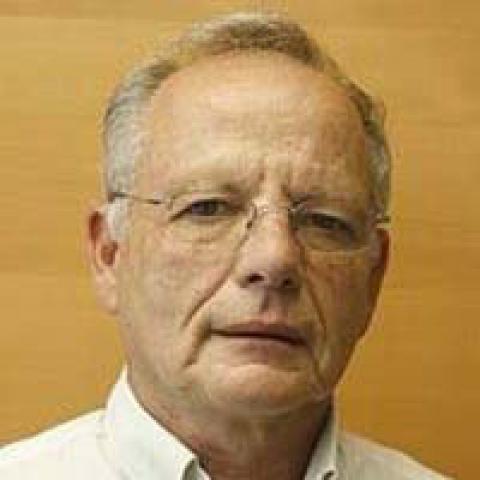

The storm generated by Knesset member Zuhair Bahloul of the Zionist Camp for refusing to label the stabber of an Israeli soldier in Hebron a “terrorist” is yet another lesson in the complex reality of Arab society in Israel. The bloody conflict between their fellow people, the Palestinians, and their fellow citizens, the Jews of Israel, traps Israel’s Arab citizens between a rock and a hard place: solidarity and empathy on the one hand, and denial and repression on the other. In June 2014, Knesset member Haneen Zoabi of the Arab Balad Party dared argue that the killers of three Israeli youths in the West Bank were not terrorists. The agonized shrieks of Israel’s elected officials reverberated at the time through the halls of the Knesset.
Bahloul was decrying the fact that for Israelis, “anyone struggling for his liberty and his independence is a terrorist.” Zoabi voiced her solidarity in cruder terms. She said that her occupied people will keep resorting to violence “until Israeli citizens and society will wake up and feel the suffering of the other." Similar comments have been made for decades by Israeli Palestinians.
But the troubling innovation is to be found in the Jewish-Israeli society. The sayings ''All of Israel are responsible for one another'' (Talmud, Shevuot 39a) and ''All Israel are friends'' describe a society proud of its ethos of solidarity and mutual responsibility. But it is that same society that violates the right to solidarity among Israel’s Arab citizens. It refuses to understand that Arabs and Palestinians, too, can have an ethos of solidarity and a sense of mutual responsibility for each other. Jews the world over fought for the release of the so-called prisoners of Zion, demanding that the Soviet Union open its gates to a Jewish exodus. We, the Jews, cried out “Let my people go” (Exodus 9:1); the African-Americans cried out “Let my people go” and demanded that the world impose an embargo on South Africa under apartheid.
The Palestinian nation is also the nation of Bahloul and Zoabi. It is their right — if not their moral responsibility — to support its struggle for national freedom and even support its call to boycott Jewish West Bank settlements. Nonetheless, Bahloul stressed that he ruled out the use of violence against civilians. This, despite the fact that on his way to the Knesset he probably passes through an avenue, a square or a street named after the activists of the Irgun and Lehi, the two Jewish pro-independence underground organizations that placed bombs in a crowded market in the city of Haifa, murdered passengers on Palestinian buses and hung British troops (before Israel was established).


