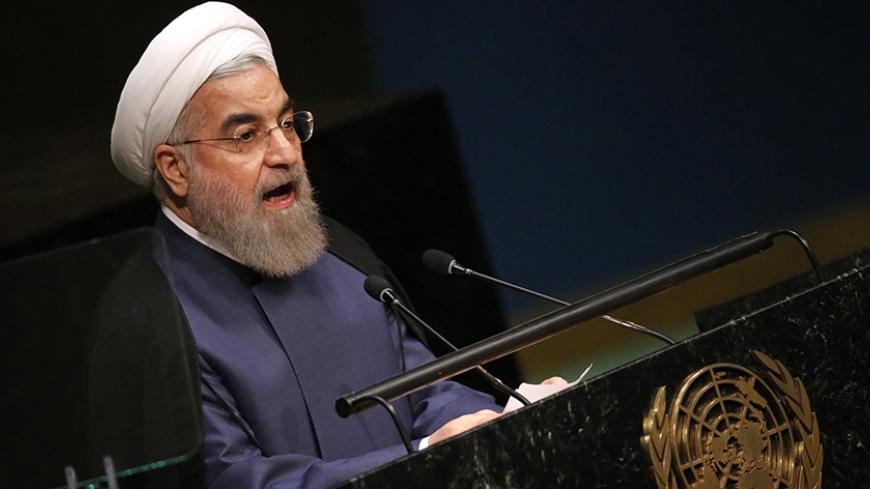
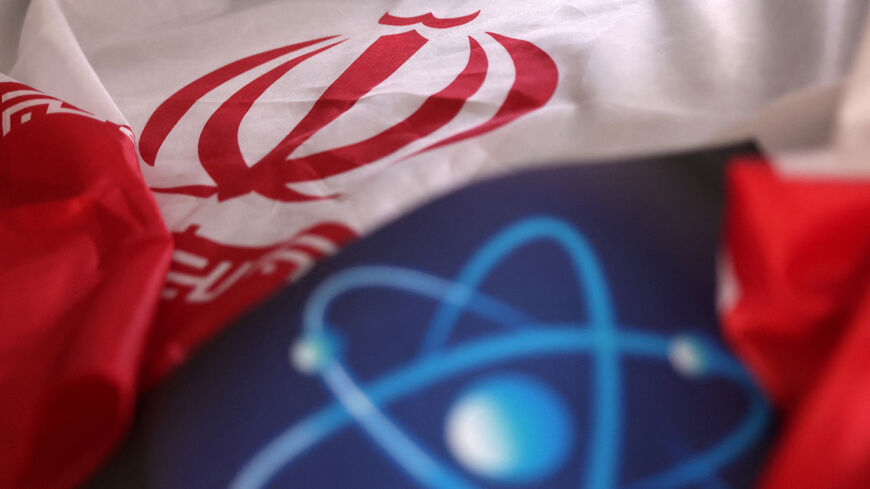
Less than 24 hours after Iranian President Hassan Rouhani’s return to Tehran from New York, where he addressed the UN General Assembly meeting Sept. 22 for the fourth time, he was strictly reprimanded by Hojat al-Islam Ali Saidi and advised to refrain from developing any further relations with the United States outside the framework of the nuclear deal, the Joint Comprehensive Plan of Action (JCPOA). Saidi is not just any hojat al-Islam, a Shiite clerical rank just below that of ayatollah, but the supreme leader’s representative to the powerful Islamic Revolutionary Guard Corps (IRGC).
In an interview with the IRGC-linked Fars News Agency on Sept. 24, Saidi said, “Under the cover of the JCPOA, the country’s government was pursuing the straightening out of relations with the United States. The Americans’ intention with the negotiations was also beyond solving the nuclear issue, but the supreme leader prevented the Americans from gaining more points.”
These comments come only days after Rouhani welcomed American companies at a Sept. 22 news conference in New York, where he said, “The nuclear deal has paved the ground for all foreign investors and companies to invest in Iran.”
This is not the first time Rouhani has tried to build on the July 2015 nuclear deal. In February, he announced his government’s economic plans for a “second JCPOA” that would include international “reconciliation.” That statement did not please the supreme leader, either.
AL-MONITOR All-Access gives you unlimited access to all our journalism, the full Daily Briefing, exclusive interviews, premium newsletters, and live events — for less than $2/week.