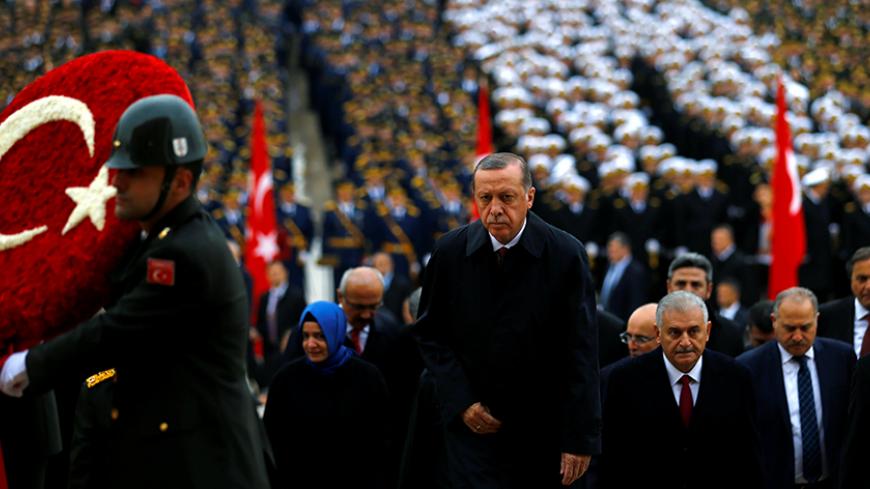
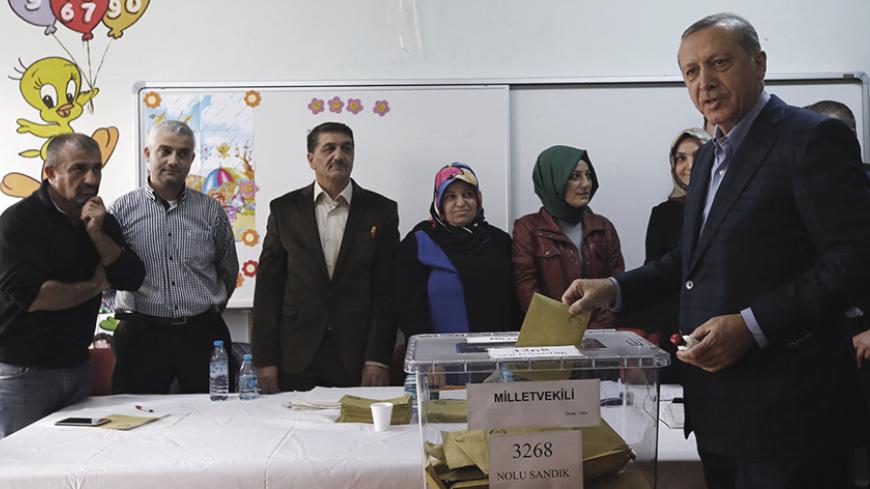
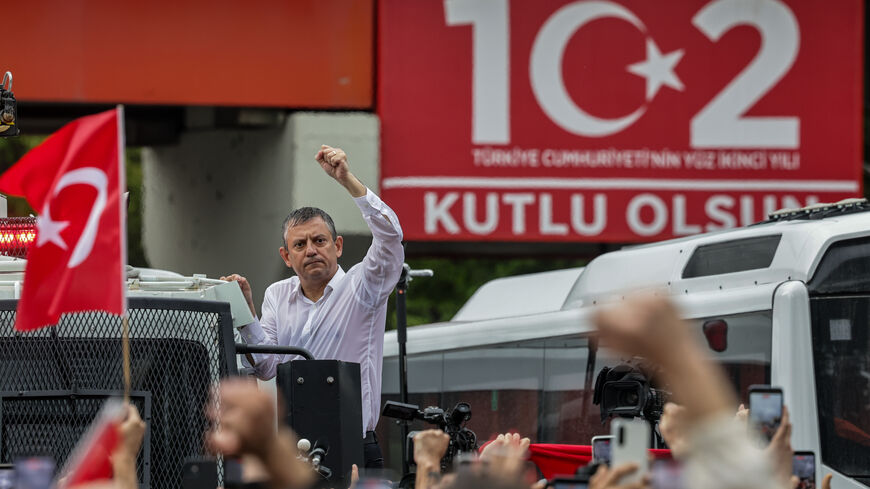
An unexpected move by an opposition leader has abruptly brought Turkey to a critical threshold, raising the prospect of a profound political shift. In a speech to his parliamentary group Oct. 11, Devlet Bahceli, the head of the Nationalist Movement Party (MHP), criticized President Recep Tayyip Erdogan for overstepping his constitutional powers and acting as a de facto executive president. As a solution, Bahceli suggested that the executive presidential system, which Erdogan has long dreamed of, should be put on a referendum to let the people have the final say. The MHP leader did not stop there. Though he had been a staunch defender of the parliamentarian system so far, he said the MHP could support the required constitutional amendments if its “sensitivities” were respected, lending critical leverage to the ruling Justice and Development Party (AKP).
Clearly, the Turkish political system is now faced with a prospect that would change all balances, sway political alliances and impact its fundamental problems.
On Nov. 2, Turkey will mark 13 years under Erdogan rule (11 years as prime minister and two years as president). Over the years, Erdogan’s priorities shifted according to the political conjuncture and according to his political power and standing. No doubt, transition to an executive presidency has been his top priority lately. Even in the early years of his rule, Erdogan brought up the presidential regime as his preferred model, but he made it a concrete objective only after August 2014, when he became Turkey’s first popularly elected president.
Turkey’s constitution, in force since 1982, bestows only symbolic powers to the president and thus exempts him from political responsibility, concentrating the actual authority in the prime minister’s hands.
AL-MONITOR All-Access gives you unlimited access to all our journalism, the full Daily Briefing, exclusive interviews, premium newsletters, and live events — for less than $2/week.