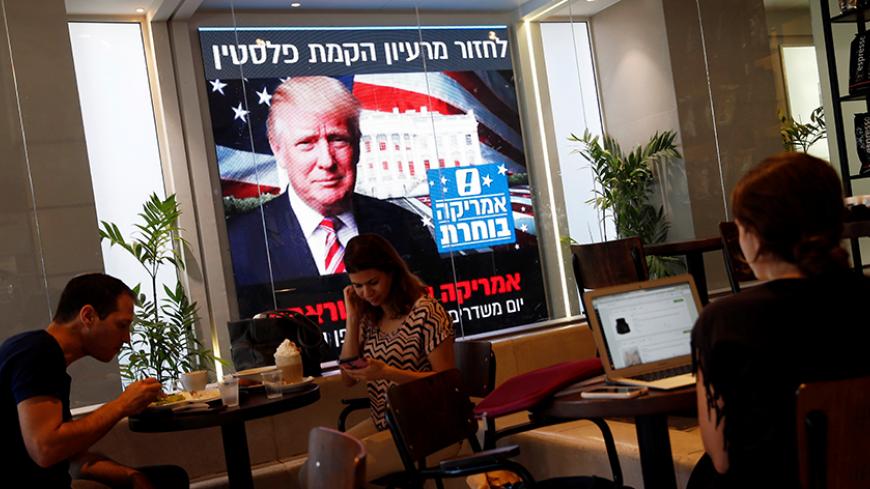
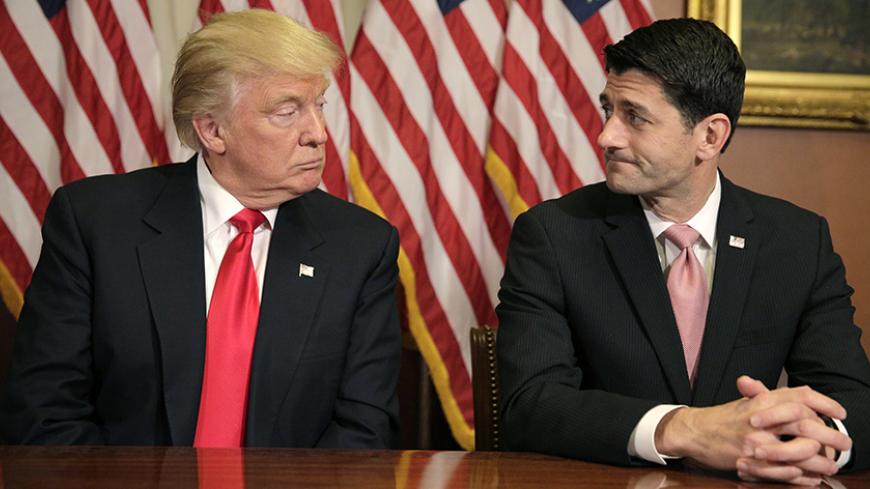
Early this week, Israeli Prime Minister Benjamin Netanyahu instructed his Cabinet not to contact Donald Trump’s emerging administration or anyone close to the president-elect. He also instructed them not to try to pressure the new administration. Any contact with a Trump associate should be handled only through the Israeli Embassy in Washington. But his Nov. 21 instructions came too late. According to a Haaretz report, Education Minister Naftali Bennett had already met a day earlier with Trump’s people in New York. At these meetings, Bennett pleaded with his hosts not to adopt the two-state-solution model as the basis for negotiations between Israel and the Palestinians and to be open to “new ideas.” Bennett is suggesting that Israel take advantage of the opportunity to announce Israel’s annexation of the settlements in the West Bank's Area C.
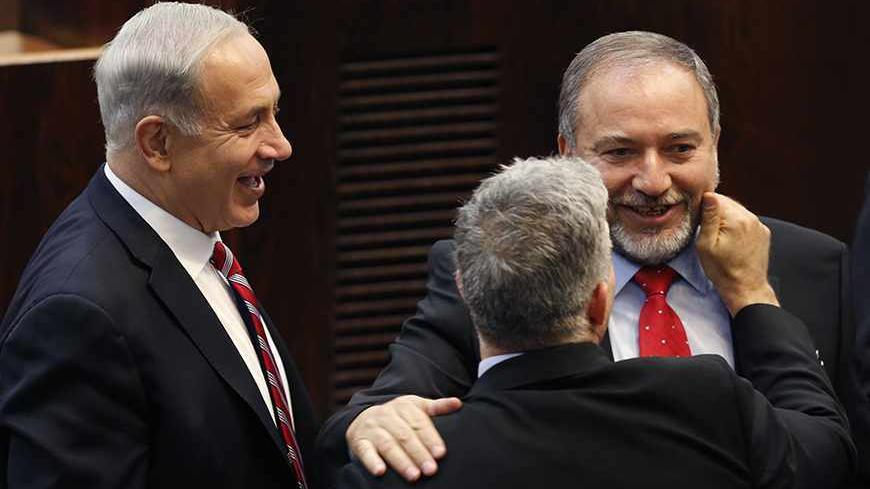
As of now, Defense Minister Avigdor Liberman is the sentry patrolling the wall around the future relationship between the Trump administration and the Netanyahu government. Liberman is passionate about his new position right in the nerve center of Israel’s defense establishment. He shocked everyone while briefing political journalists in Jerusalem on Nov. 16 by saying that he will strive to reach an agreement with the Trump administration in which Israel will freeze construction outside the major settlement blocs while building within them. The defense minister explained that what he meant was official reconfirmation of the “Bush Letter” of 2004. In that exchange of letters between President George W. Bush and Prime Minister Ariel Sharon, the president made a commitment to accept the new reality on the ground, meaning the settlement blocs. “If we get permission by the administration to act according to the Bush-Sharon formula, we have to grab it with both hands,” he said, adding that in such a setup, Israel would no longer build outside the settlement blocs. "We should follow that correspondence to the letter, without being extreme. We must neither add to it nor detract from it.”
Liberman has been under harsh political attack from the right ever since. Most of it has come from HaBayit HaYehudi, but he has also been attacked by Likud ministers who are trying to move as far to the right as possible. But Liberman isn’t bothered. He has come to terms with the fact that he will not win votes from the religious Zionists or the settlers, and he is targeting the political center instead by rebuilding his image as a security hawk and political and diplomatic pragmatist. At the same time, Liberman is also trying to establish an intimate channel of communication with the Trump administration and to become the new administration’s main address in Israel. He knows that it is the key to building up his image as the “responsible adult” in the government and to legitimize himself as a potential candidate for leadership.
Given this plan, Liberman is not worried about attempts to brand him a leftist. He knows that no one will buy it. As someone who lives in a settlement and who frequently released bellicose statements while he was in the opposition, Liberman is now seeking the more moderate path. He wants to position himself for the possibility that Netanyahu will be forced to resign as prime minister or defeated in an election. His model is Sharon, who did the exact same thing. During Netanyahu’s first term, Sharon became foreign minister, changed his spots and accompanied the prime minister on negotiations with the Palestinians on the Wye River Memorandum. When Netanyahu was defeated in the next election and resigned, Sharon stood by his side and took the torch from him. This is Liberman’s plan as well. To implement it, however, he will have to reunite his Yisrael Beitenu party with the Likud before the next elections.
AL-MONITOR All-Access gives you unlimited access to all our journalism, the full Daily Briefing, exclusive interviews, premium newsletters, and live events — for less than $2/week.