Why Israel’s Beersheba buses dropped Arabic announcements
With Prime Minister Benjamin Netanyahu pointing a finger at Israeli Arabs for wildfires, it's no wonder that the city of Beersheba removed announcements in Arabic from its public buses.
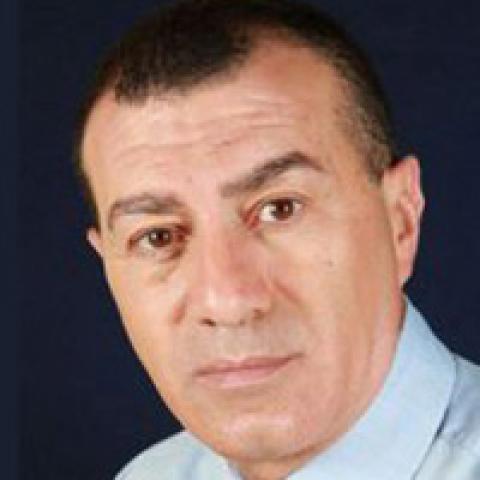

In the week that headlines in Israel blared “arson terrorism,” and Prime Minister Benjamin Netanyahu blamed the Arabs, Beersheba Mayor Ruvik Danilovich asked the Ministry of Transportation to stop the Arabic-language announcements on the city’s buses. Danilovich, a young and energetic mayor, appears to have given in to pressure from passengers in the capital of the south, who protested against the announcement of bus stops in Arabic, in addition to Hebrew. In response, Transportation Minister Yisrael Katz of the Likud Party instructed the municipal bus company to immediately silence the public address system in Arabic.
Many of the passengers on Beersheba’s buses and trains are Bedouin residents of the city and its environs, and the public address system in Arabic is designed to serve them. “True, most of us speak Hebrew,” Haroun Abu Jama from the nearby Bedouin town of Lakiya told Al-Monitor. “But the minute we’re told that Arabic is not wanted here, we’re actually also being told that we’re also not wanted here."
Arabic is an officially recognized language in Israel. By law, government ministries are required to issue all official announcements and ads, as well as official forms, in both Hebrew and Arabic, and people are entitled to address local authorities and government agencies in Hebrew or Arabic. Municipal authorities are also required to issue all official announcements and ads in the two languages.
In 1999, Adalah - the Legal Center for Arab Minority Rights in Israel petitioned the Supreme Court demanding that mixed cities such as Tel Aviv-Jaffa, Ramle and Lod be obliged to add Arabic writing to signposts in their jurisdiction. The Supreme Court accepted the petition and ruled that “Arabic is the language of Israel’s largest minority, which has lived in Israel from days of yore. This is a language linked to the cultural, historic and religious features of the Arab minority in Israel. This is the language of citizens who despite the Arab-Israeli conflict wish to live in Israel as loyal citizens with equal rights, with respect for their language and culture. The desire to assure a dignified coexistence for the descendants of our forefather, Abraham, with mutual tolerance and equality, justifies recognition of the Arabic language on municipal signposts in those cities where there is a significant Arab minority [6%-19% of the population].”


