Will this woman become Iran’s first female president?
In a remarkable twist, Iranian Reformists appear to eagerly welcome the potential candidacy of female Principlist Marzieh Vahid Dastjerdi in the upcoming presidential elections.
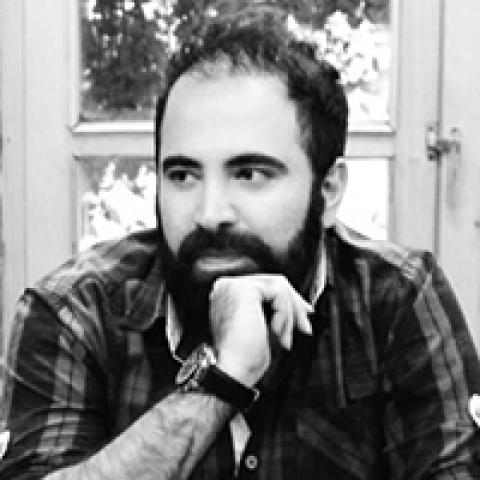

Iran may see its first female presidential candidate in the May 19 elections. After a period of silence, Marzieh Vahid Dastjerdi, the Islamic Republic’s first and only female minister, has in recent days and weeks made headlines once again. Dastjerdi headed the Ministry of Health and Medical Education between 2009 and 2012 after being one of three women proposed as ministers by President Mahmoud Ahmadinejad during his second term (2009-13). The other two nominees were Susan Keshavarz for the post of education minister and Fatemeh Ajorlu for welfare and social security minister. Of the three, only Dastjerdi succeeded in securing a vote of confidence from Iran’s parliament and was confirmed on Sept. 3, 2009.
Although Dastjerdi is the Islamic Republic’s first female minister, she is not the first Iranian woman to hold such office. Farrokhroo Parsa and Mahnaz Afkhami served as education minister and minister of women's affairs, respectively, under former ruler Mohammad Reza Shah Pahlavi (1941-1979).
Just as with many others who worked with Ahmadinejad, Dastjerdi did not last until the end of his presidency. On Sept. 27, 2012 — following differences between the two — he dismissed Dastjerdi. It is believed that her dismissal was due to her insistence on keeping Bagher Larijani, her deputy at the Ministry of Health, in his post. Bagher Larijani is one of the powerful Larijani brothers, including Ali and Sadegh, the respective chiefs of the legislative and judiciary branches of the government. In this vein, factional conflicts between the Larijanis, who were opponents of Ahmadinejad, notably intensified in the days leading to Dastjerdi’s dismissal. Following her removal, Dastjerdi returned to the medical profession. In April 2015, Supreme Leader Ayatollah Ali Khamenei appointed her as a member of the Imam Khomeini Relief Foundation’s board of trustees.
More recently, Dastjerdi ran in the February 2016 parliamentary elections as a member of the Grand Principlist Alliance or Principlist List. When the election results were announced, she found herself among the 29 other Principlist candidates who ran in Tehran and did not stand much of a chance against the rival Reformist-moderate List of Hope. Securing 860,000 votes, Dastjerdi came in 35th. By comparison, the 30th and final parliament member elected from Tehran got over 1.7 million votes.


