What does it mean to be a Jerusalemite?
While Israel's Supreme Court recognized Palestinians' continued "resident-native" affiliation to Jerusalem after extended absences, Israel Prize judges gave this year’s award to a person who has dedicated his life to replacing Palestinian residents with Jews.

Two contradictory, almost polar opposite events recently transpired in Jerusalem. The first was a unanimous ruling March 14 by three Supreme Court justices — Chief Justice Miriam Naor, Menachem Mazuz and Uzi Vogelman — determining that the right to settle in Jerusalem is not reserved only for Russians, Americans or New Zealanders who have never visited Israel but whose grandmothers were Jewish. Thus, the justices ordered that the state grant the same right to Palestinians born in Jerusalem who have lived for extended periods in Moscow, New York or Auckland. The court defined the status of such Palestinians as “resident-native” and determined that their affinity to their homeland obliges the Interior Ministry to grant them permanent residency upon their return.
This precedent-setting ruling resulted from an appeal filed by Akhram Abdel Haqq, a Palestinian born in East Jerusalem in 1959, eight years before it was unilaterally annexed to Israel, in 1967. Abdel Haqq was 12 when his parents immigrated to the United States, and after he returned to Jerusalem in 1989, the Interior Ministry refused to reinstate his residency. Included among the some 14,000 Palestinians whose residency has not been restored since 1967 are those who moved from the city to the West Bank for family reasons and students who returned to their city after completing studies abroad. Their right to residency expired, Israel claimed, because the center of their lives had moved elsewhere for seven years or more. The claim that their parents and grandparents had been born in Jerusalem did not stand them in good stead in light of the semi-official Israeli policy of “Judaizing” Jerusalem, or in less refined, blunter terms, weeding out non-Jewish residents to make way for a Jewish majority. The Abdel Haqq decision could be welcome news for thousands of other Jerusalem-born Palestinians whose residency requests were rejected.
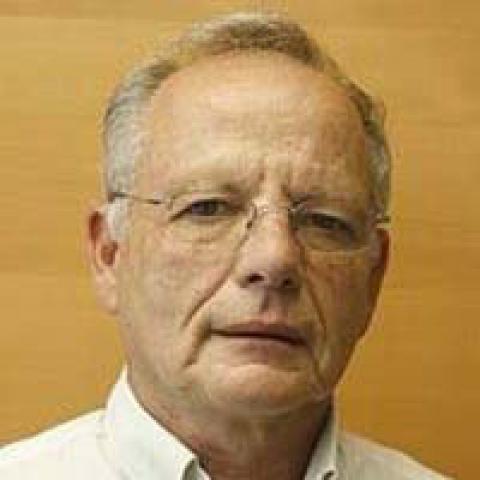
That leads to the second newsworthy event, which also involves a decision by judges. The panel that selected this year’s recipients of the Israel Prize for Lifetime Achievement is closely tied to the policy of thinning the non-Jewish population of East Jerusalem. The prize committee announced on March 16 that Israel’s most prestigious award would be given to David Be’eri, the founder and director of Elad, a nongovernmental organization dedicated to creating a Jewish majority in Arab neighborhoods of Jerusalem. Explaining their decision, the panel members wrote that Be’eri had been selected based on his “contribution to the state in single-handedly establishing a national enterprise — the City of David. … He initiated, founded, led and still leads this blessed activity that has turned the City of David into a national and international heritage, education and tourism site of the first order. The City of David is the historic kernel from which Jerusalem grew — the heart of the Jewish people and the focal point of the Book of Books [the Bible].” The City of David is an archaeological site and settlement near the Western Wall that some believe was the original core of Jerusalem.
The Israel Prize was awarded to Be’eri “on the 50th anniversary of the unification of Jerusalem,” the committee wrote. Indeed, who better than Be’eri to represent the version of unification embodied in the policy pursued by successive Israeli governments since 1967 of creating a Jewish majority in the city by weeding out the Palestinian residents? A 2009 report by Ir Amim, an organization seeking to ensure the “dignity and welfare of all Jerusalem residents,” reveals the methods by which the East Jerusalem neighborhood of Silwan was populated by Jews and turned into the “City of David,” named after the biblical king or Be’eri.


