Can Iraqi politicians appease Sadr as he flexes his influence?
Iraqi leaders seek to convince parliamentarian Muqtada al-Sadr to keep the calm and support the political process.
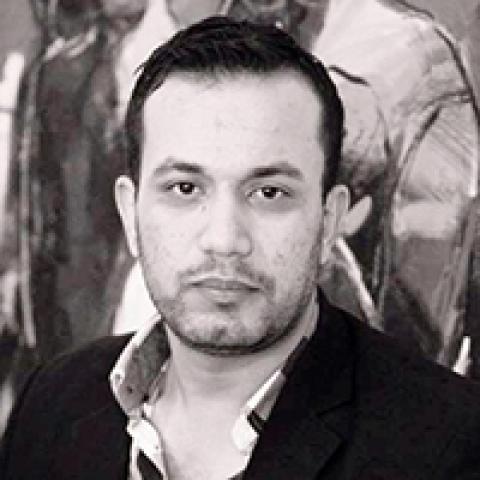

Many Iraqi political and government leaders have been beating a path to the door of Muqtada al-Sadr, hoping to reach some kind of understanding or detente with the powerful Shiite leader of the Sadrist movement.
Sadr's movement holds 34 seats in the Iraqi parliament and has an armed force known as Saraya al-Salam, with an unknown number of troops. For two years, Sadr has been organizing major demonstrations, alleging corruption and seeking reform of Iraq's election process. He has also advocated dismissing the High Election Commission (HEC) and replacing it with a completely nonpolitical board. He has been pressuring influential and highly placed Iraqi political forces and has threatened to have his followers boycott elections unless reforms are made.
Iraq's provincial elections were postponed from April until Sept. 16 and could be delayed until next year given the ongoing struggle with the Islamic State (IS). Parliamentary elections are tentatively scheduled for April 2018.
On May 8, Iraqi Prime Minister Haider al-Abadi met with Sadr in Karbala. The media offices of Sadr and Abadi did not make any press statements after the meeting, but a source in the Iraqi premiership who attended the Karbala meeting told Al-Monitor the men met for three hours.


