Gaza's children suffer as Hamas, PA continue conflict
Five Israeli doctors discuss their recent visit to Gaza, where disease is rampant, medication is disappearing and medical patients have given up hope.
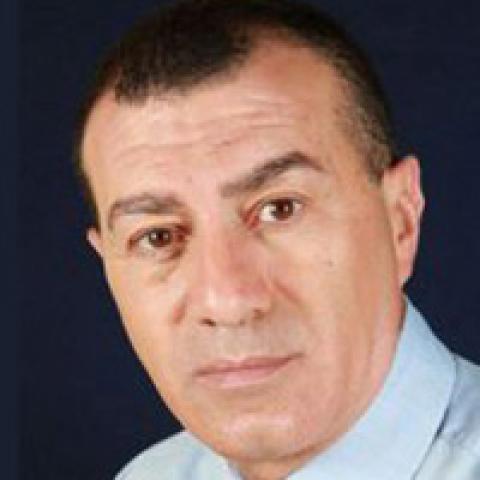

Dr. Ra'ad Haj Yehia, a member of the Physicians for Human Rights-Israel (PHRI) organization, returned June 26 from the Gaza Strip. He says he still hasn’t recovered from the scenes he saw in the hospitals there. Yehia was summoned to Gaza by medical teams in the Strip who asked the PHRI organization “to come and save lives.”
Ever since Palestinian President Mahmoud Abbas decided to sever the Palestinian Authority (PA) from the Strip and stop transferring money to it in April 2017, the health system in Gaza has been collapsing. The Gaza Health Ministry reported at the end of June on infants and children who died because the PA refused to underwrite life-saving medical treatment for them in Israel or other hospitals in the West Bank.
In an interview with Al-Monitor, Yehia says he has not been able to get back into his routine since his return from Gaza after four intensive days of treating patients. “I simply could not bear it; I’m going [home] sick. I saw innocent children who died for no reason, through no fault of their own. The situation is unbearable.” Yehia lives in Neve Shalom, a collective village near Latrun in which Jewish and Arab families live together. Yehia says that although the trip to Gaza from his house takes only 45 minutes, as soon as he stepped foot in the Strip he felt that he was in a different world.
“It is worse than harsh places I had seen in Africa. From the moment you enter [Gaza], your senses are hit with a terrible stench of sewage. Death is in the air,” he says. Yehia, who ordinarily works as a pediatrician in Israel’s Meuchedet HMO, could barely face the mothers of children and infants who begged him to take them to Israel for treatment. “They think that we can take them out,” he says, adding, “There are parents who are so desperate that they told us, ‘Better that our children die — we can’t do anything for them anymore.’”


