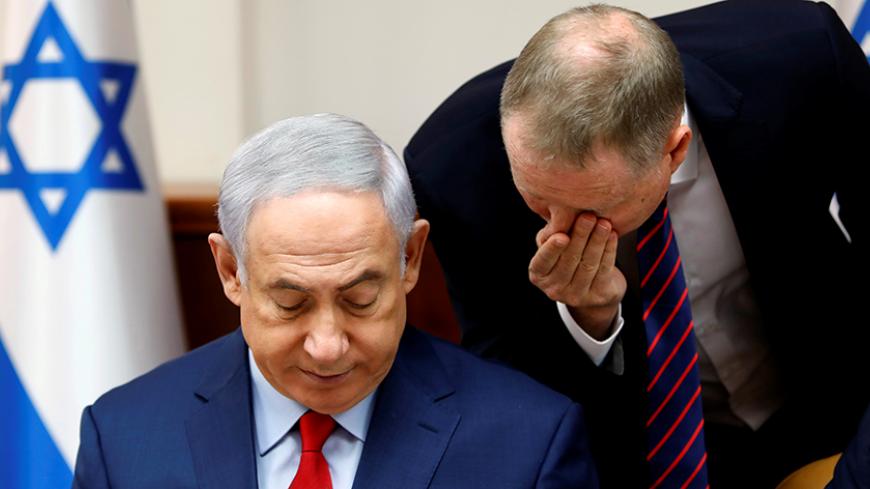
The fact that Ari Harow has turned state witness against Prime Minister Benjamin Netanyahu constitutes a strategic milestone in the investigations against Netanyahu. If, until now, it had been impossible to guess how the investigation would end, now the logical gamble is that at least one bill of indictment will be filed against Netanyahu. Israel’s enforcement authorities do not usually grant generous plea bargains to people who deserve to sit behind bars such as Harow (the prime minister's former chief of staff) except in the pursuit of one goal: to incriminate the person who manipulates the state witness.
As we recall, former Prime Minister Ehud Olmert abandoned his post amid the type of investigations that are now being conducted against Netanyahu. More so, it would seem that Netanyahu is under suspicion of charges that are more serious than those against Olmert, just before the latter resigned. Does all this signal the end of the Netanyahu era? This is very likely to be the case, although the timetable involved is rather obscure. And in Israel, nothing is over until it’s over. We are now only at the beginning of the process, more or less.
Israeli law does not state that a prime minister undergoing criminal proceedings must resign. Actually, according to law, he can continue to serve in his position until after he is convicted and the verdict in his case is conclusive — assuming that he or she is convicted “with shame.” In other words, Netanyahu can argue that he wants to continue as usual as prime minister, even during the course of the investigations (which is what is happening right now), and even after he is indicted and goes to trial. Netanyahu uses this argument and his Likud adherents support him. But the chances are low, even minuscule, that this would actually happen.
Olmert resigned from the premiership following a political process. Once the magnitude of the investigation against him became public knowledge, and once American Jew Moshe Talansky gave preliminary testimony against Olmert, the public atmosphere became hostile to the prime minister, forcing him to resign. Olmert’s senior coalition partner, Ehud Barak, who headed the Labor Party at the time, gave Olmert an ultimatum: either resign or the Labor Party would resign from the coalition and the government would fall. Olmert resigned in September 2008, and Tzipi Livni tried to assemble a government but failed. Israel called for new elections, and Benjamin Netanyahu entered the Prime Minister’s Office in April 2009.
AL-MONITOR All-Access gives you unlimited access to all our journalism, the full Daily Briefing, exclusive interviews, premium newsletters, and live events — for less than $2/week.