Why did Israel now decide to arrest Islamic Movement leader?
Police waited three weeks before detaining Sheikh Raed Salah, leader of the outlawed Northern Branch of the Islamic Movement, fearing that his arrest during the Al-Aqsa crisis might lead Israeli Arabs to riot.
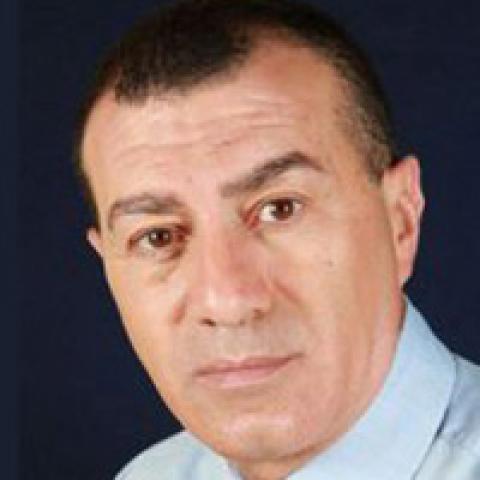

No one was surprised by the Aug. 15 arrest of Sheikh Raed Salah. Residents of the Israeli Arab town of Umm al-Fahm, where the head of the Northern Branch of the Islamic Movement in Israel lives, as well as his family, knew it was only a matter of time before police would come knocking on his door in the middle of the night. His wife, Camela Ahmed Mahajna, told Arabic-language Radio Ashams that in light of what she called the Israeli media’s campaign of incitement against her husband, he had been certain the police were biding their time, waiting for a suitable moment to arrest him. He was right.
Salah’s name came up in relation to the crisis over the installation of metal detectors at the entrance to Jerusalem’s Temple Mount/Haram al-Sharif compound in July, as someone inciting Muslims to violence to “liberate” Islam’s third holiest site. Salah was one of the founders of the Mourabitoun, a group of Muslims mobilized by the Islamic Movement to protect Al-Aqsa Mosque against Jewish visitors to the site. He was one of the first to issue a religious clarion call years ago, warning that Al-Aqsa was under threat and that the Jews were desecrating it by their very presence there.
In November 2015, with the outbreak of the wave of attacks that some call the individual intifada, Israel’s Security Cabinet decided to outlaw the Northern Branch. Yoram Cohen, head of Shin Bet at the time, objected to the move, arguing that there was insufficient evidence linking the group to terror activity. At the Rishon LeZion Magistrate’s Court hearing on remanding Salah to custody on Aug. 15, however, Judge Eytan Mizrachi revealed that he had seen prima facie evidence “pointing to a man who heard the speeches of the suspect … that led him to [commit] a violent act, something that could attest to his [Salah’s] posing a threat.”
The police presented the court with a series of allegedly seditious comments by Salah after the July 14 killing of two Israeli police officers near the Temple Mount by three residents of Salah’s hometown of Umm al-Fahm. In particular, they pointed to a sermon Salah delivered at the funerals of the three men, in which he praised their actions, as evidence of his inciting war over Al-Aqsa. Why, then, was Salah only arrested three weeks after the funerals?


