What's behind Qatar’s Cabinet shuffle?
With a recent Cabinet shuffle, Qatari Emir Tamim bin Hamad Al Thani appears to be positioning his country for long-term economic success by taking advantage of short-term realities.
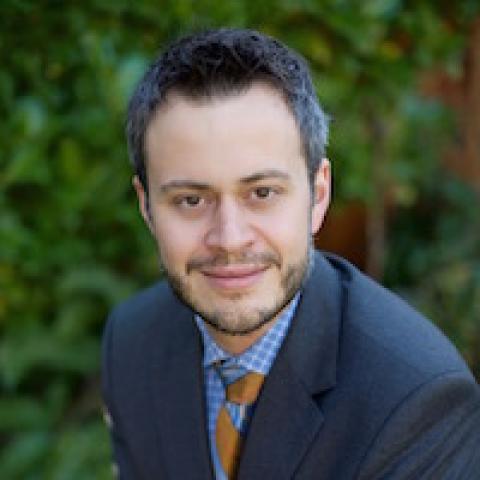

The emir of Qatar, Sheikh Tamim bin Hamad Al Thani, ordered a Cabinet shuffle on Nov. 4 that put experienced executives and younger royals in top positions. Tamim appointed Qatar National Bank CEO Ali Ahmed al-Kuwari to a new portfolio that combines the Commerce and Industry Ministries under a single new ministry. Qatar Petroleum CEO Saad al-Kaabi was appointed minister of state for energy affairs, and new ministers will lead the Justice, Administrative Development, Labor and Social Affairs, and Municipality and Environment Ministries.
Tamim also issued decrees restructuring Qatar Petroleum and the Qatar Investment Authority (QIA), the country’s sovereign wealth fund, which has assets worth roughly $320 billion. The emir named Foreign Minister Mohammed bin Abdulrahman Al Thani to serve as QIA chairman and Mohammed bin Hamad Al Thani as chairman of the Qatar Financial Markets Authority.
The shuffle, the second since early 2016 and the first since the Gulf Cooperation Council (GCC) crisis that isolated Qatar erupted in June 2017, does not signal a major transformation in Doha’s policies or a drastic shift in power in Doha. Qataris had expected a shake-up earlier, but the blockade led by Saudi Arabia prompted the leadership to postpone it. Now, however, Doha feels more confident about its position vis-à-vis the so-called Anti-Terror Quartet (ATQ) — Bahrain, Egypt, Saudi Arabia and the United Arab Emirates (UAE) — and last month Saudi Crown Prince Mohammed bin Salman delivered a speech to foreign investors that left analysts thinking that Riyadh might be on the verge of reassessing the strident position against Qatar that it has maintained for the past 17 months.
Unquestionably, the geopolitical context of the region has been an important variable in Doha's equation. The leadership is optimistic that Qatar can develop a strong footing as Riyadh tries to deal with the intense backlash from Turkey and Western governments regarding the premeditated murder of the journalist Jamal Khashoggi in Istanbul last month. With all the outside attention being paid to Saudi Arabia and the decision-making of its millennial crown prince, Qatar seeks to take advantage of the situation and move to address bureaucratic and systemic issues within its own government that need resolution, especially if the rift within the GCC becomes institutionalized.


